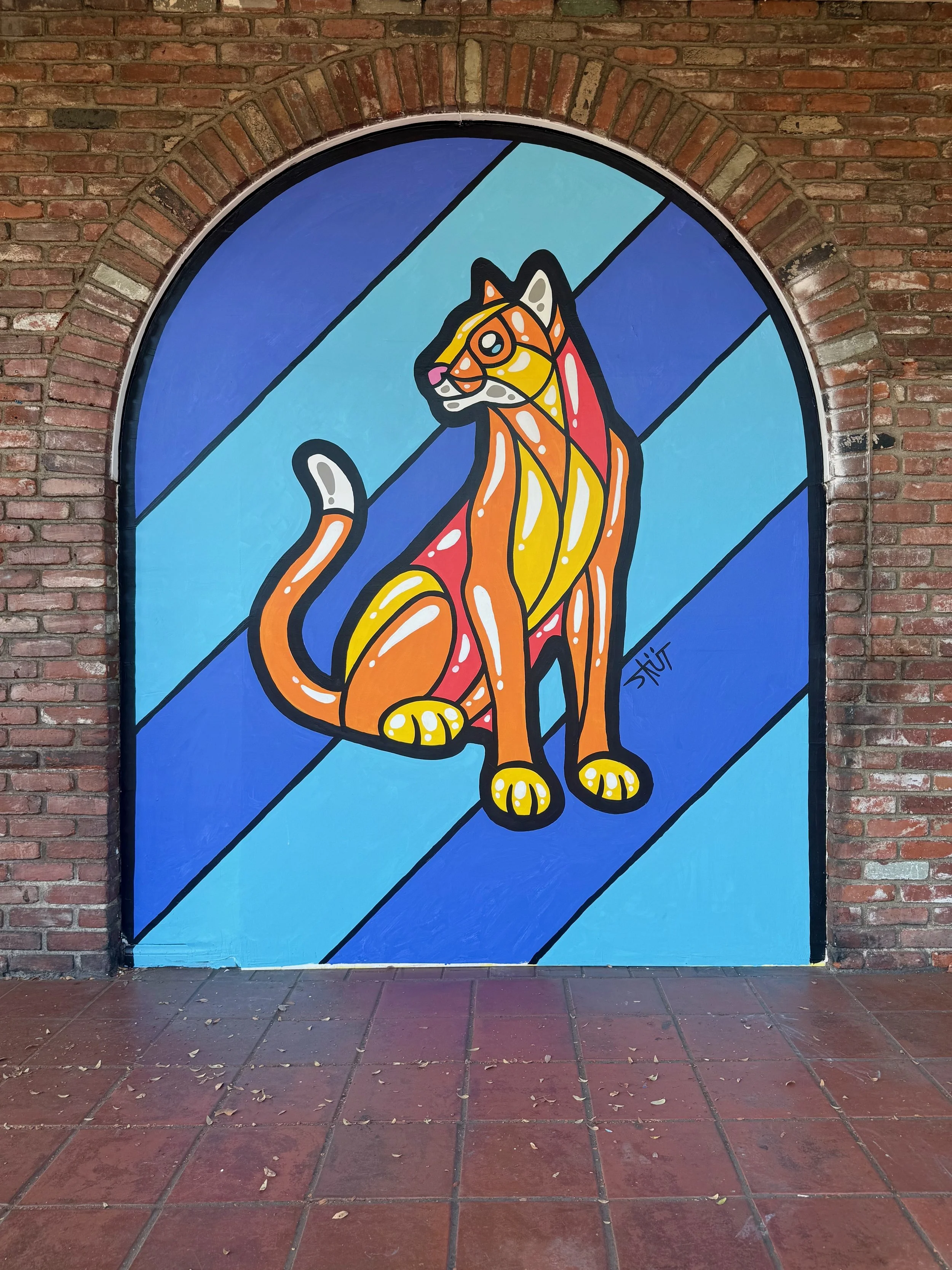
West Hollywood artist Sküt introduces Rewilding Weho, a privately commissioned, large-scale exterior art installation celebrating the native California wildlife found throughout Los Angeles.
Faring, owner of the historic former French Market building at 7985 Santa Monica Boulevard, commissioned Sküt to bring life and color to the property while it awaits its next chapter.
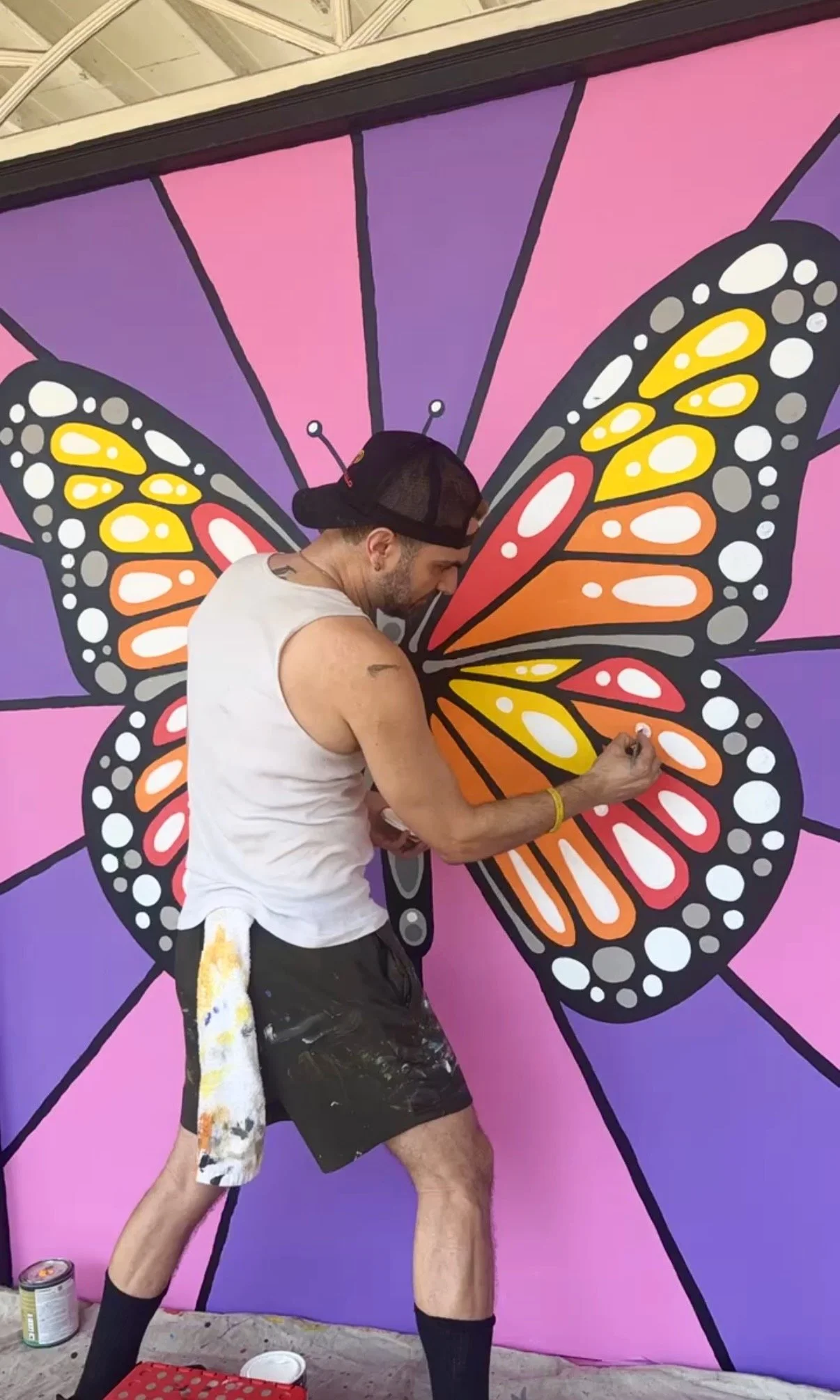
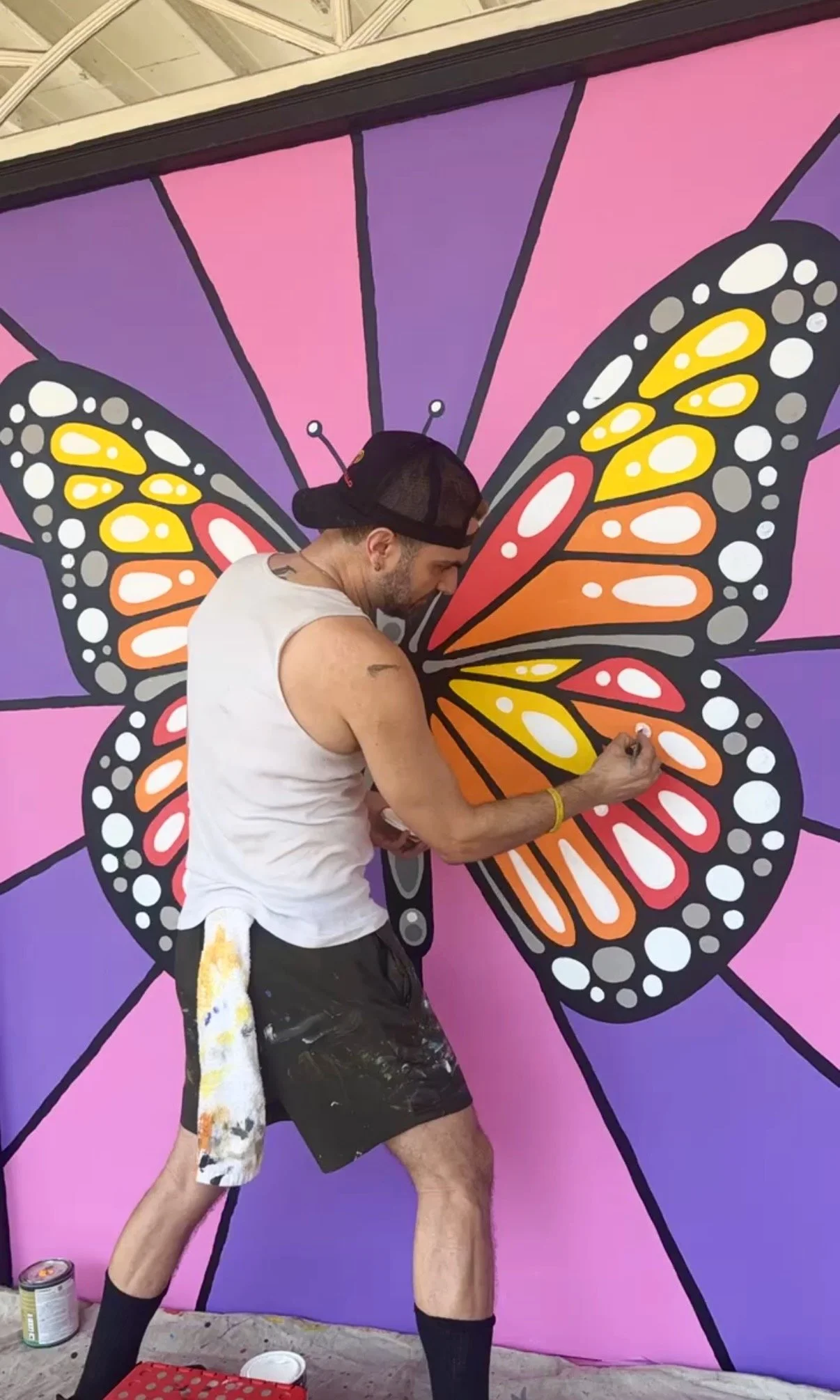
Artist Sküt stands next to the Monarch Butterfly centerpiece of his art installation, Rewilding Weho.
“This is my love letter to California, Los Angeles, and specifically West Hollywood,” says Sküt. “LA is home, and WeHo is where I’ve grown as an artist.”
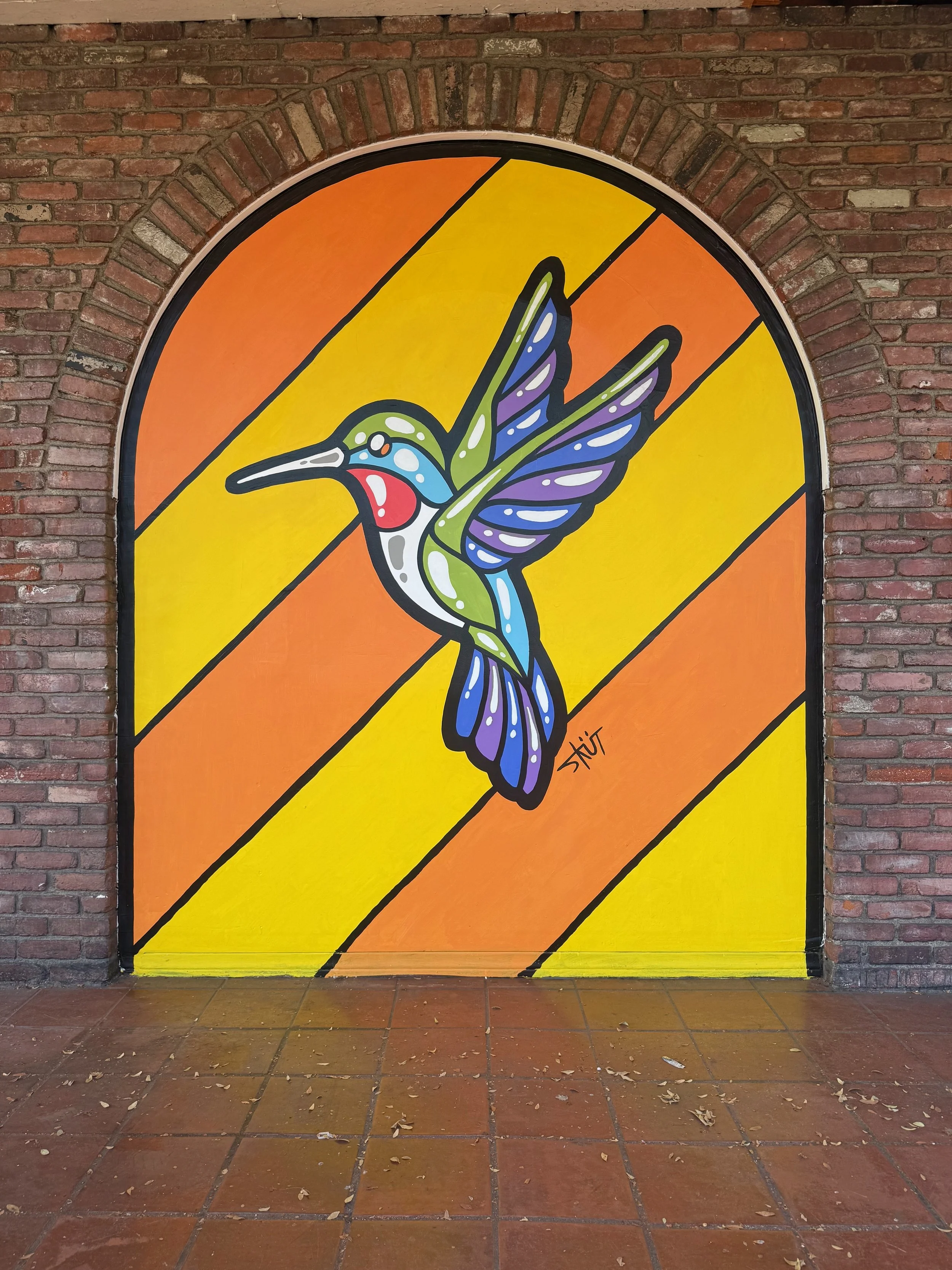
The site-specific installation features dramatic, hand-painted imagery across six architectural surfaces on private property along historic Route 66.
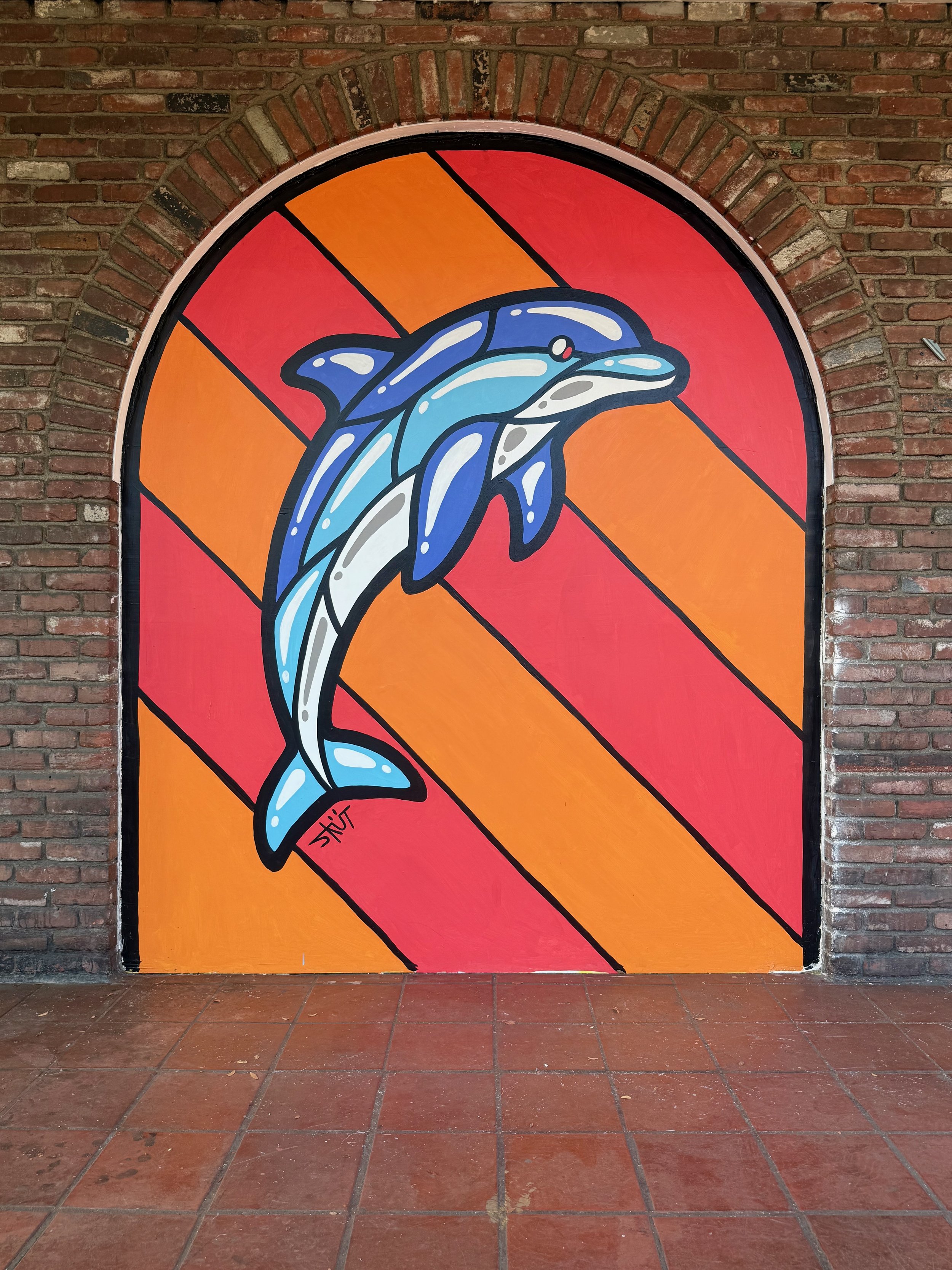
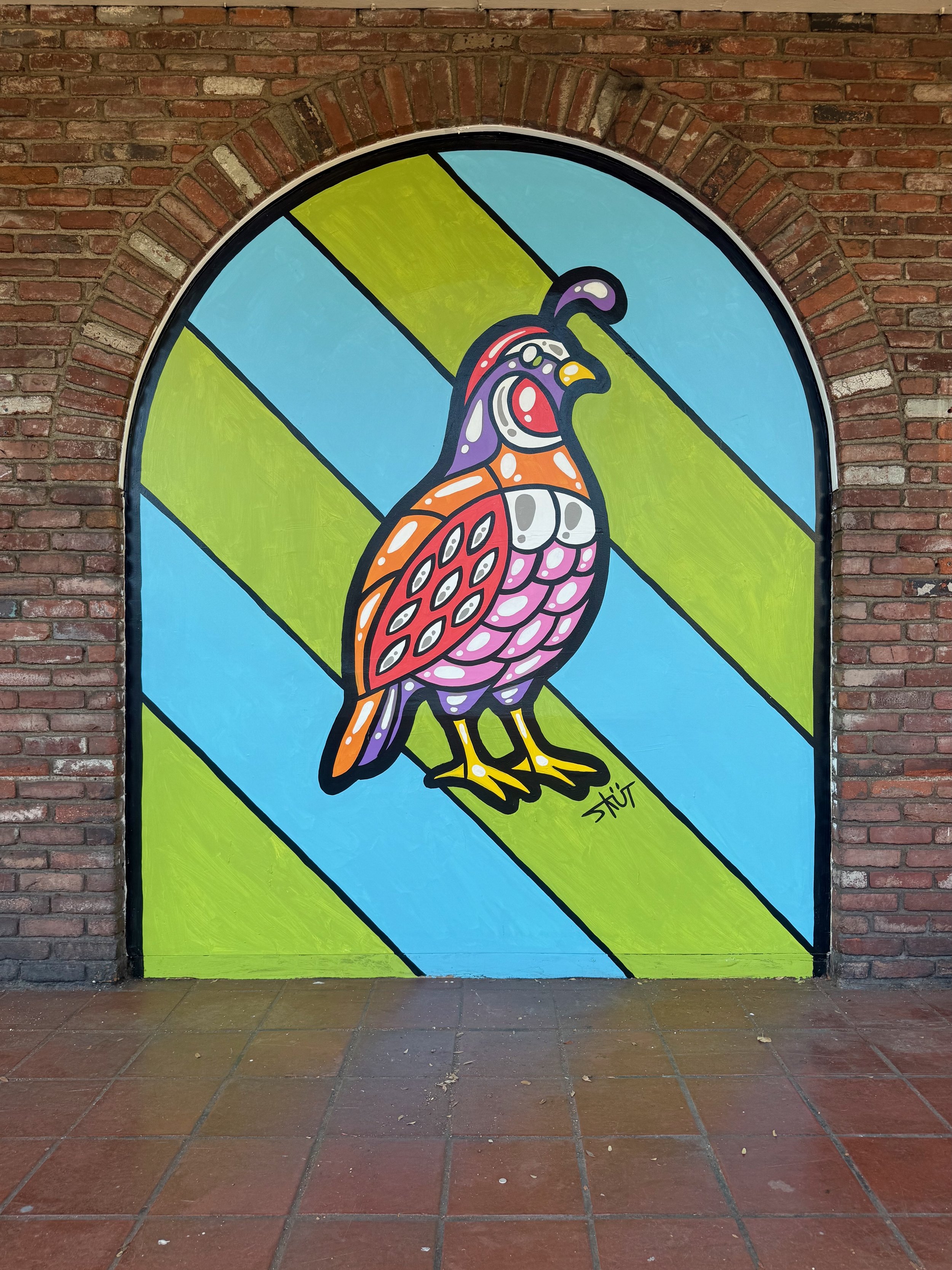
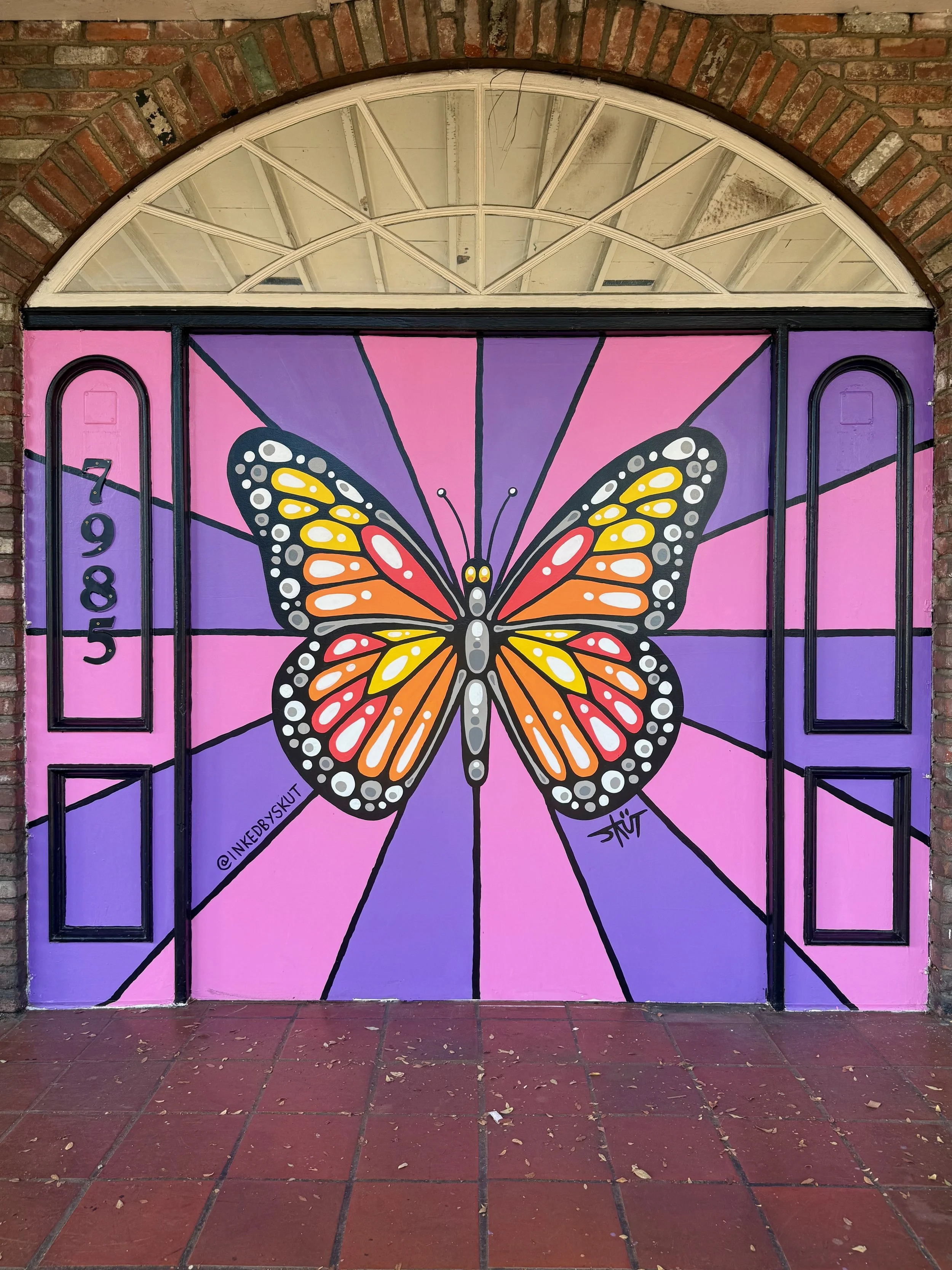
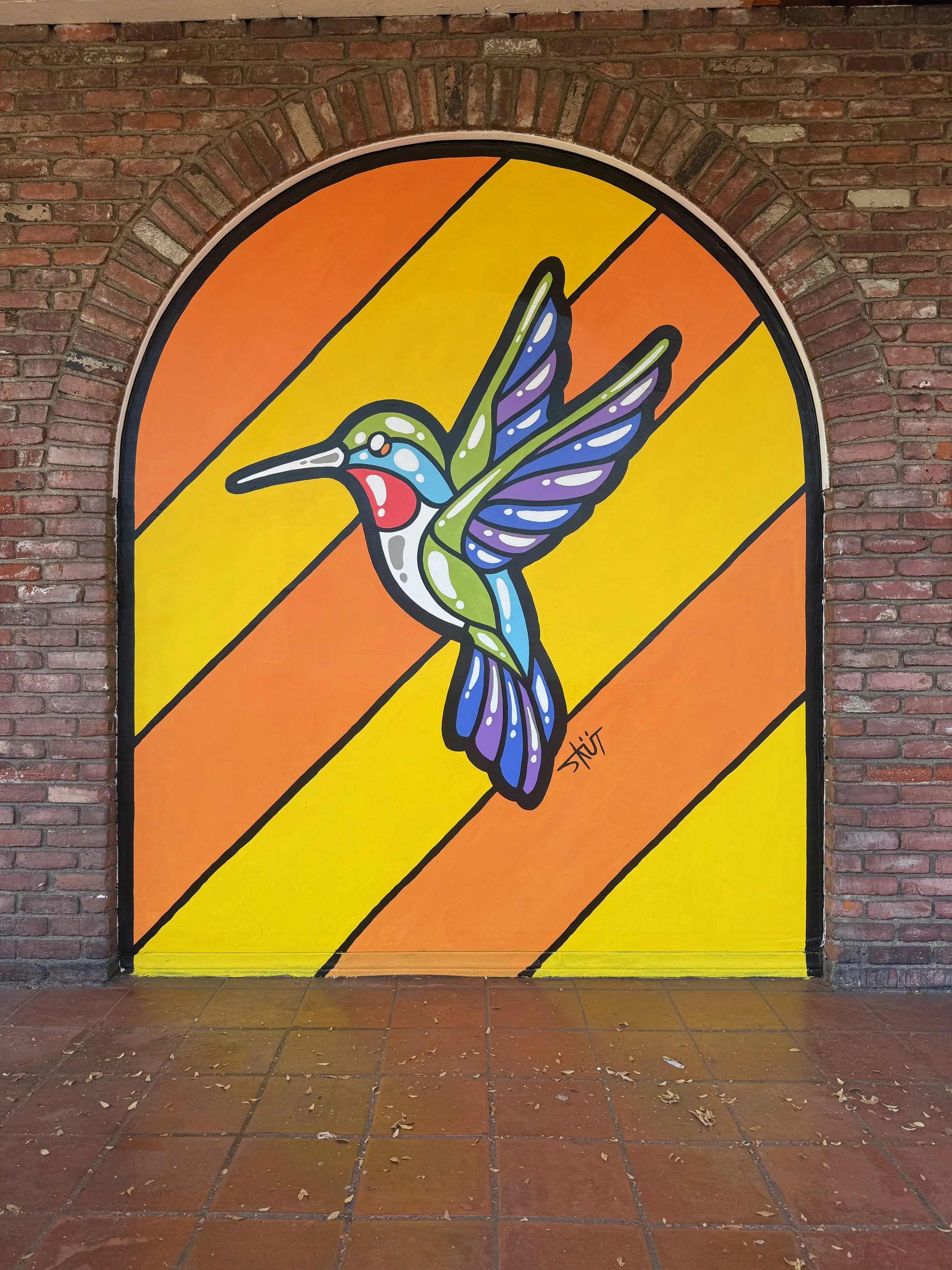
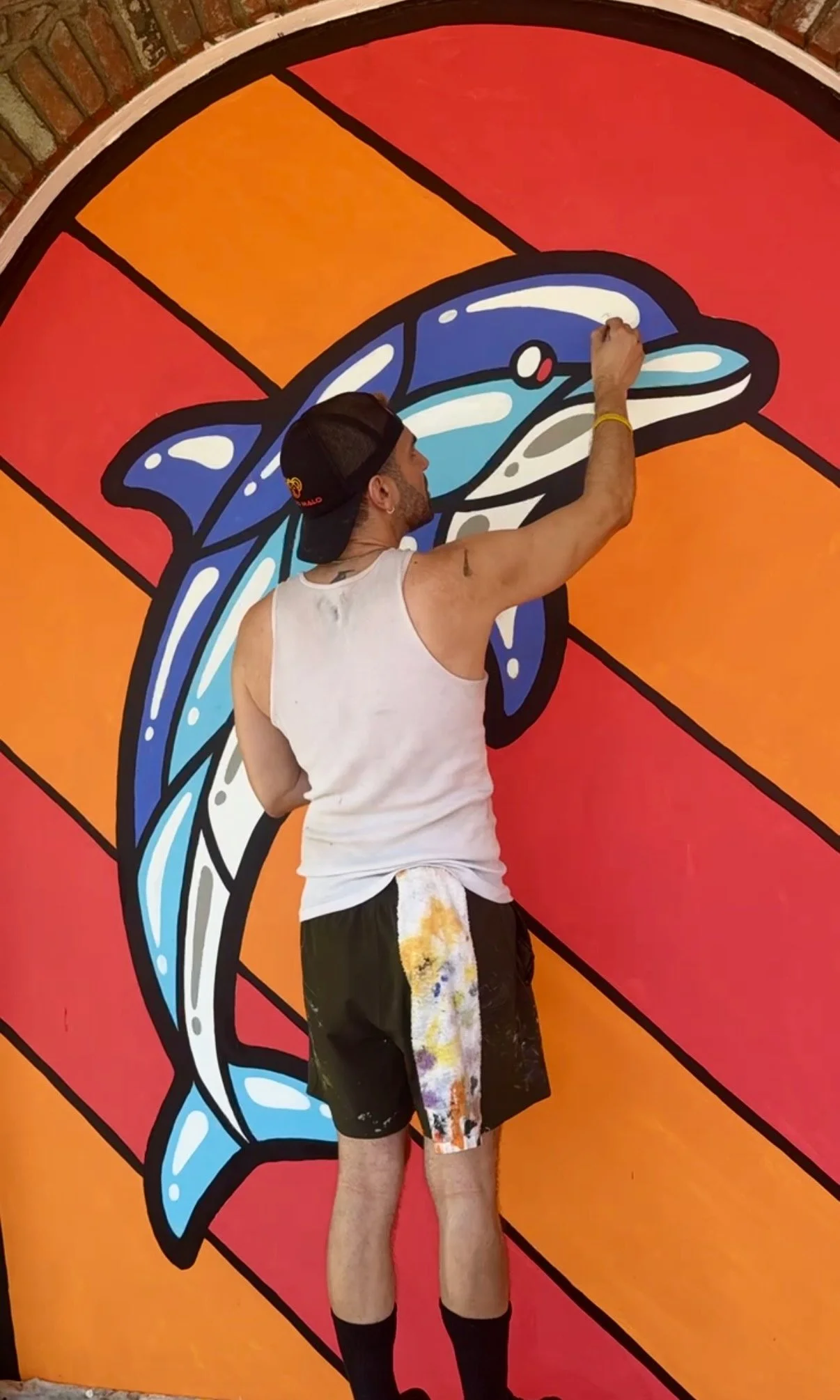
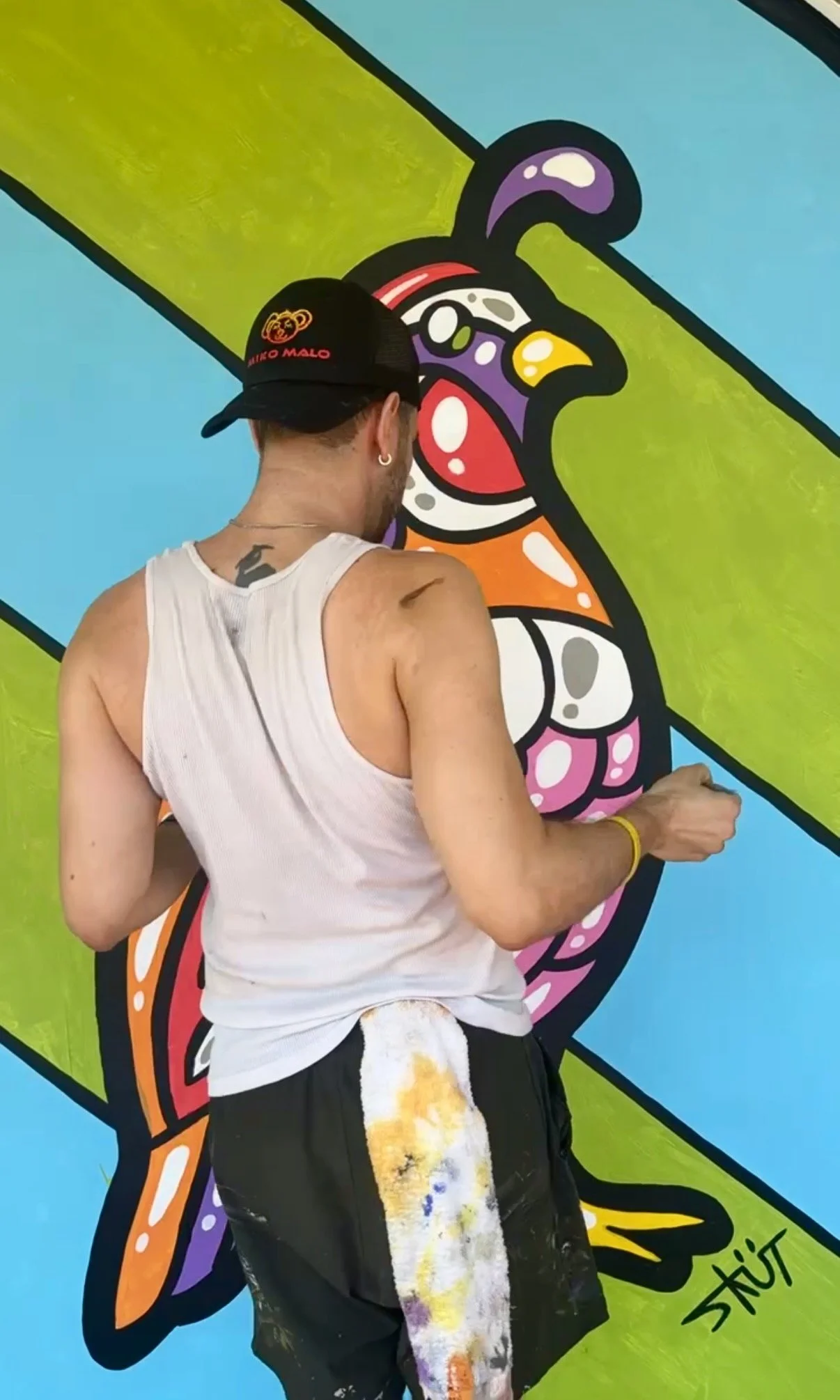
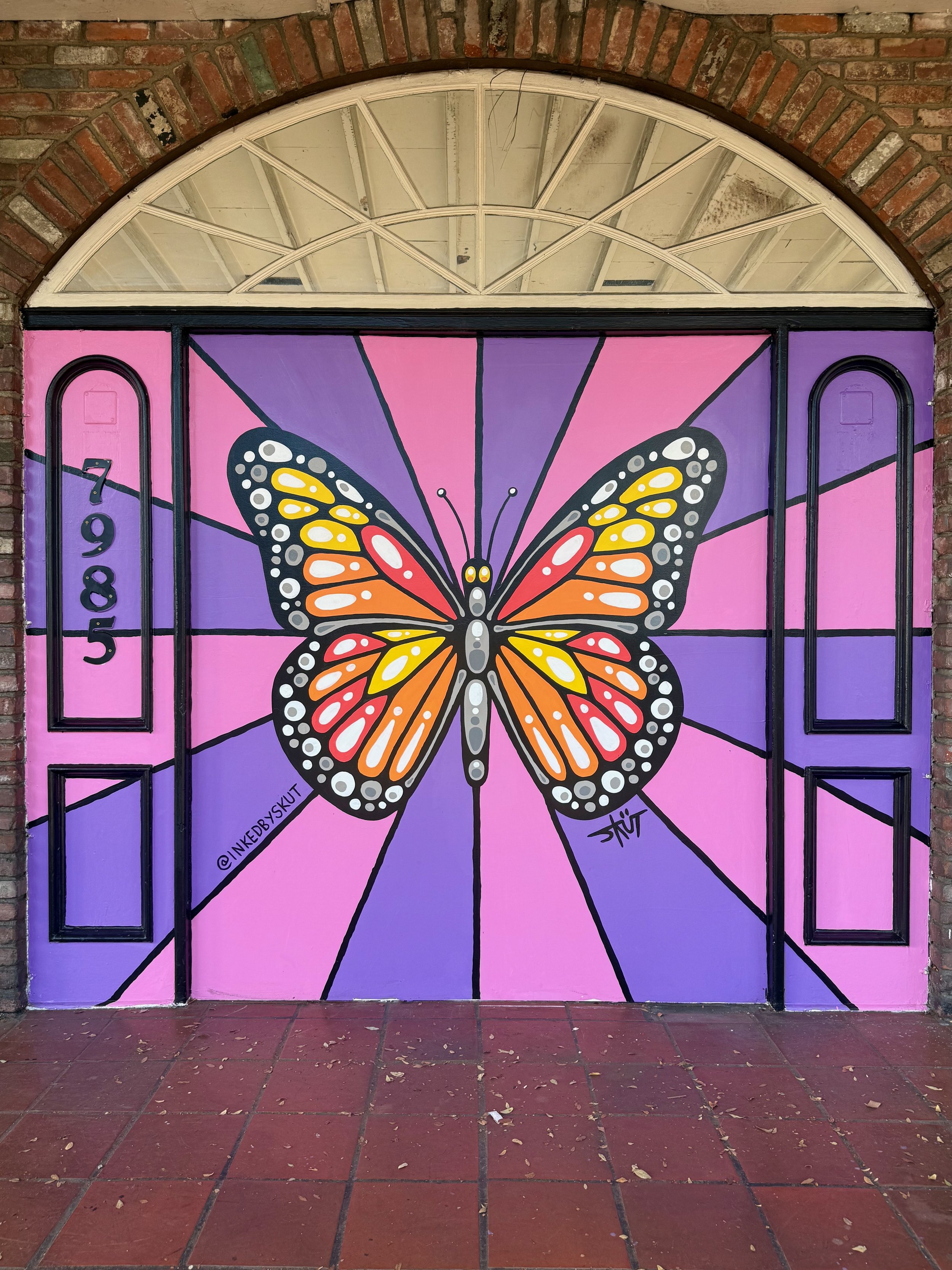
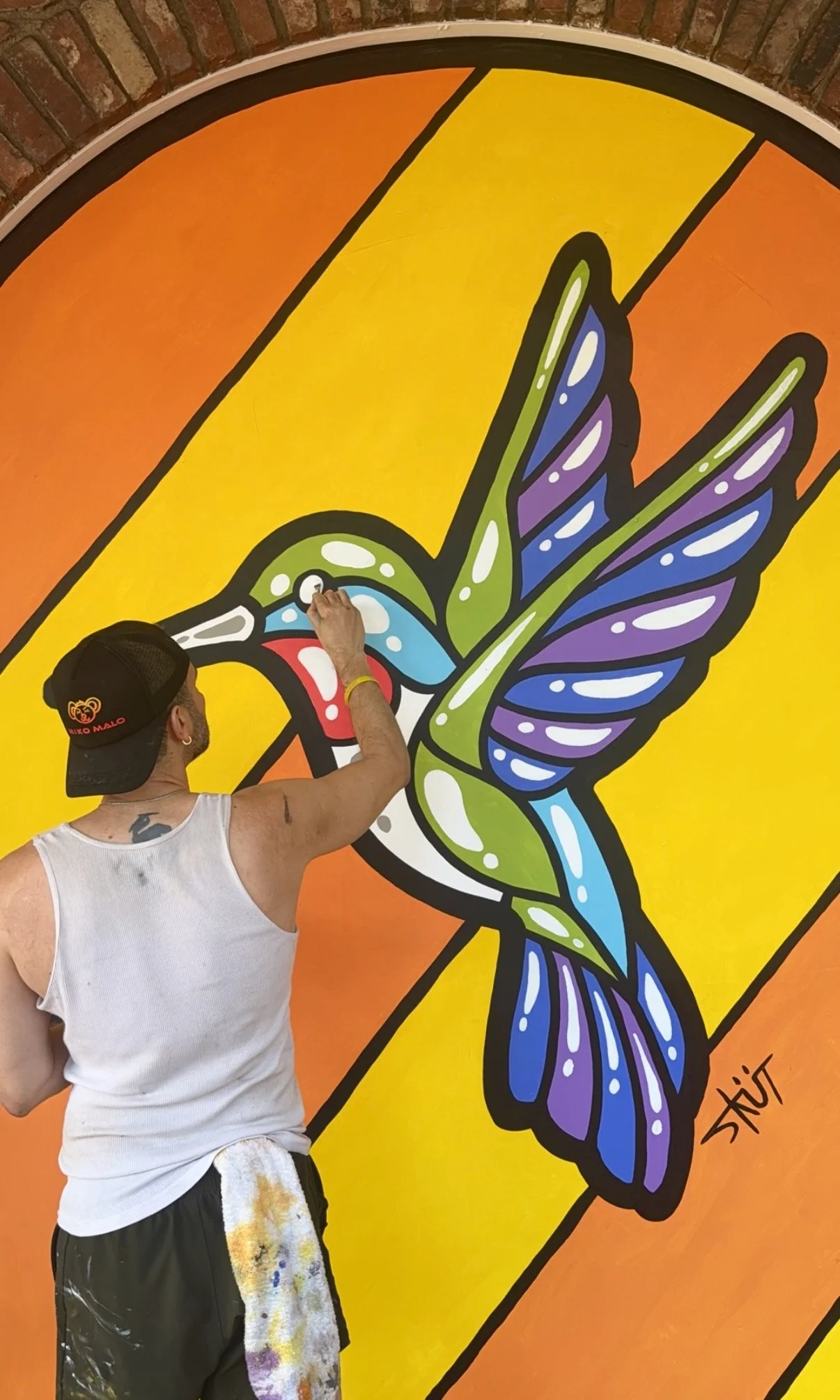
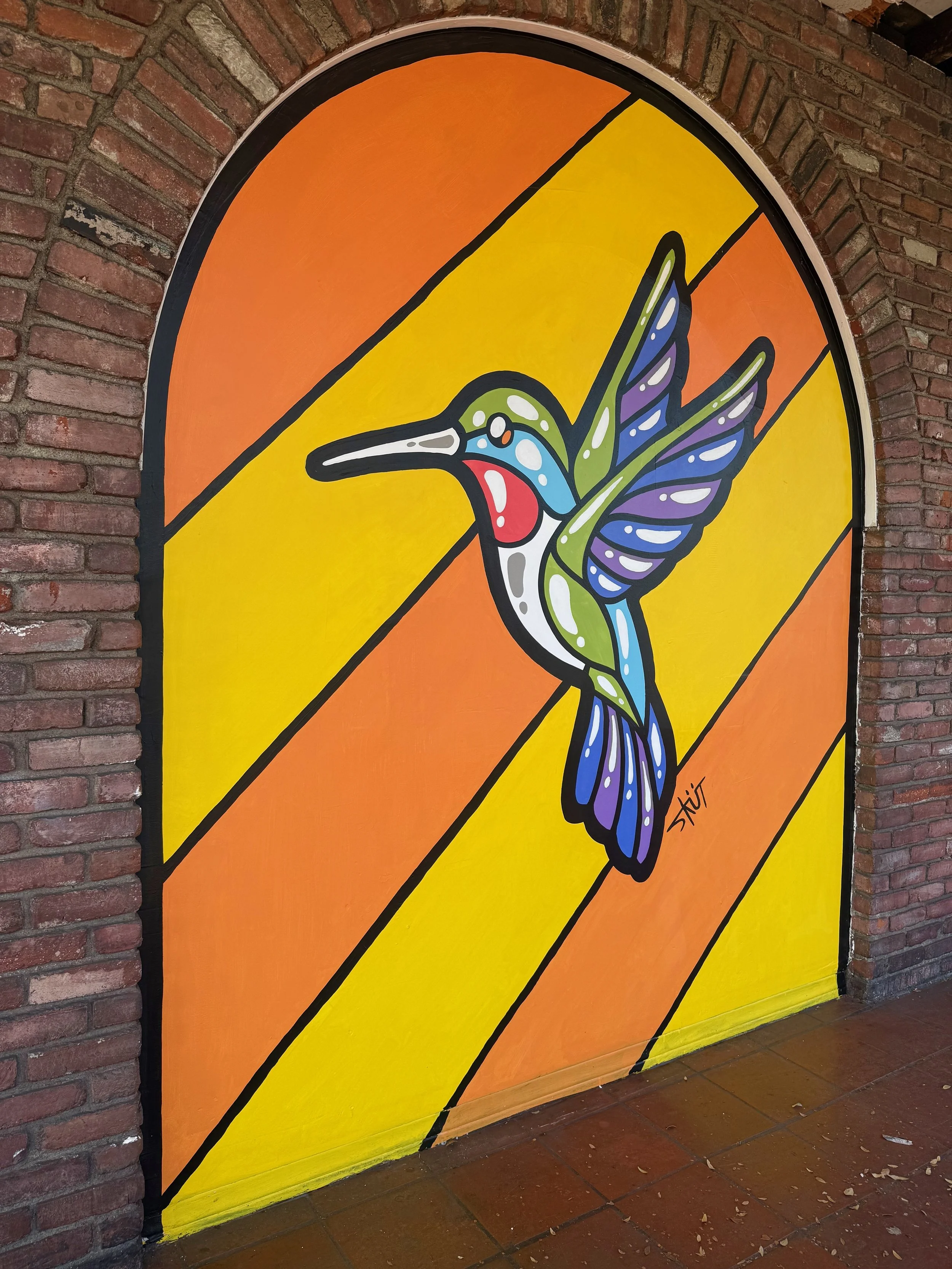
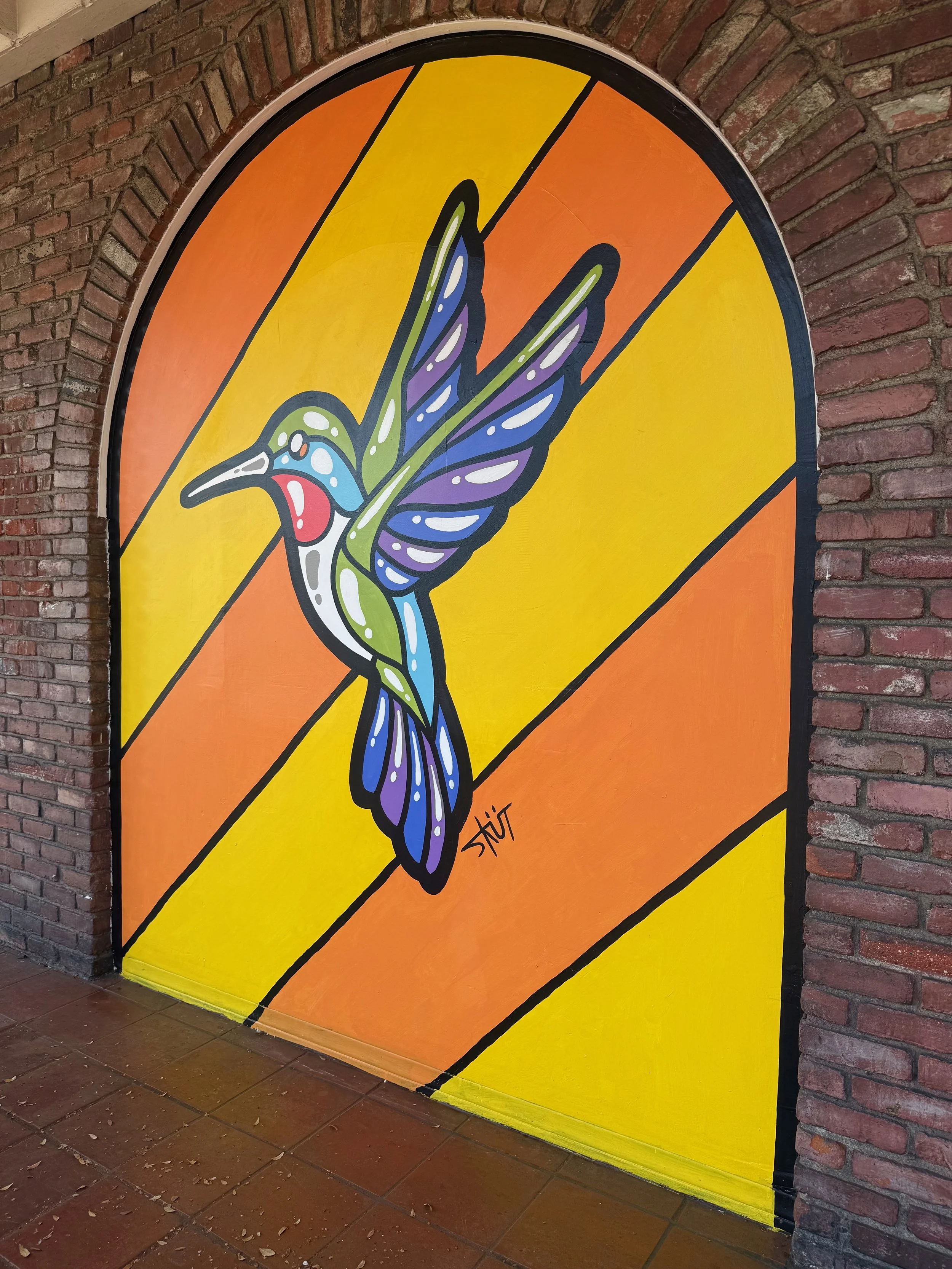
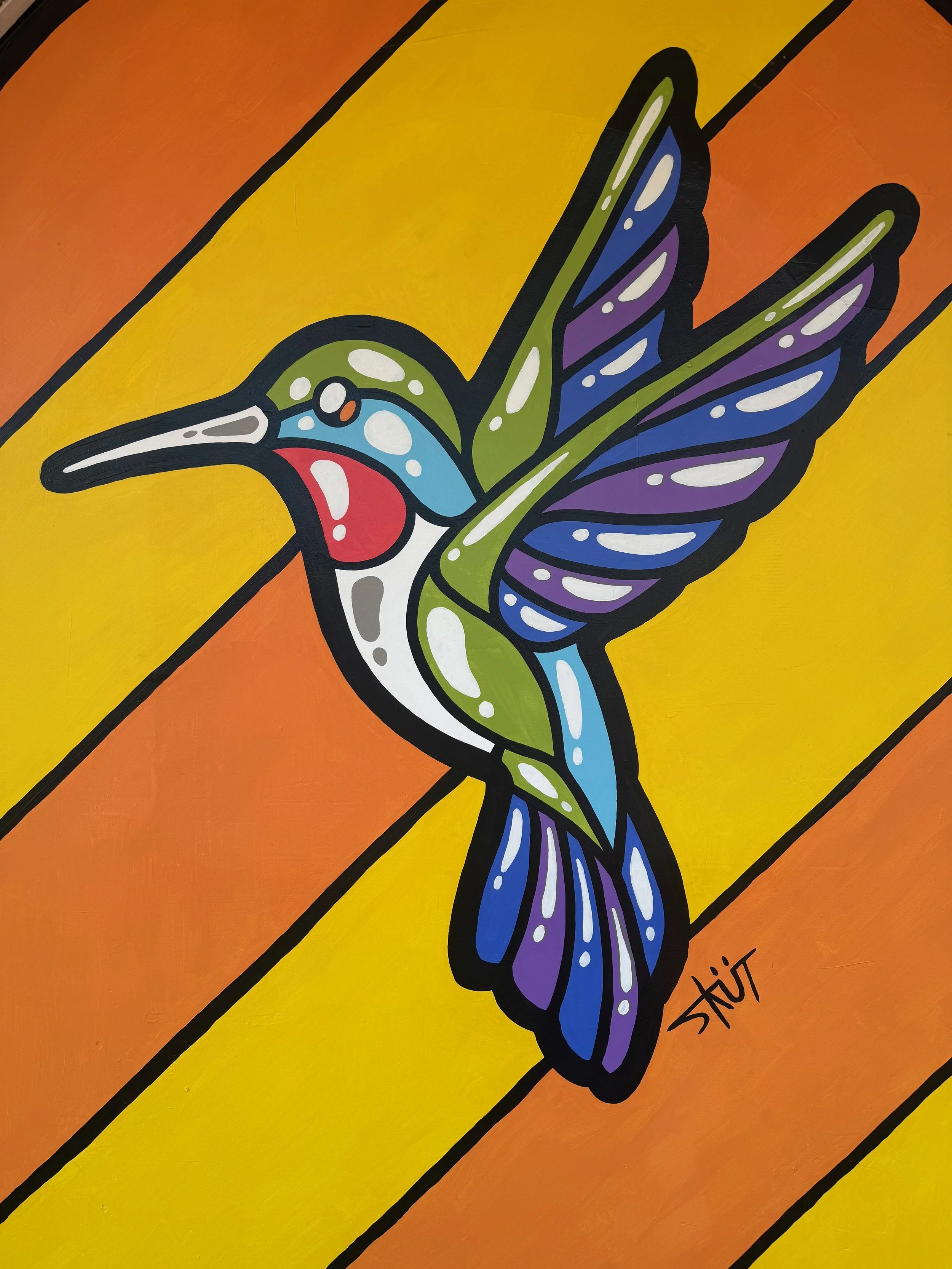
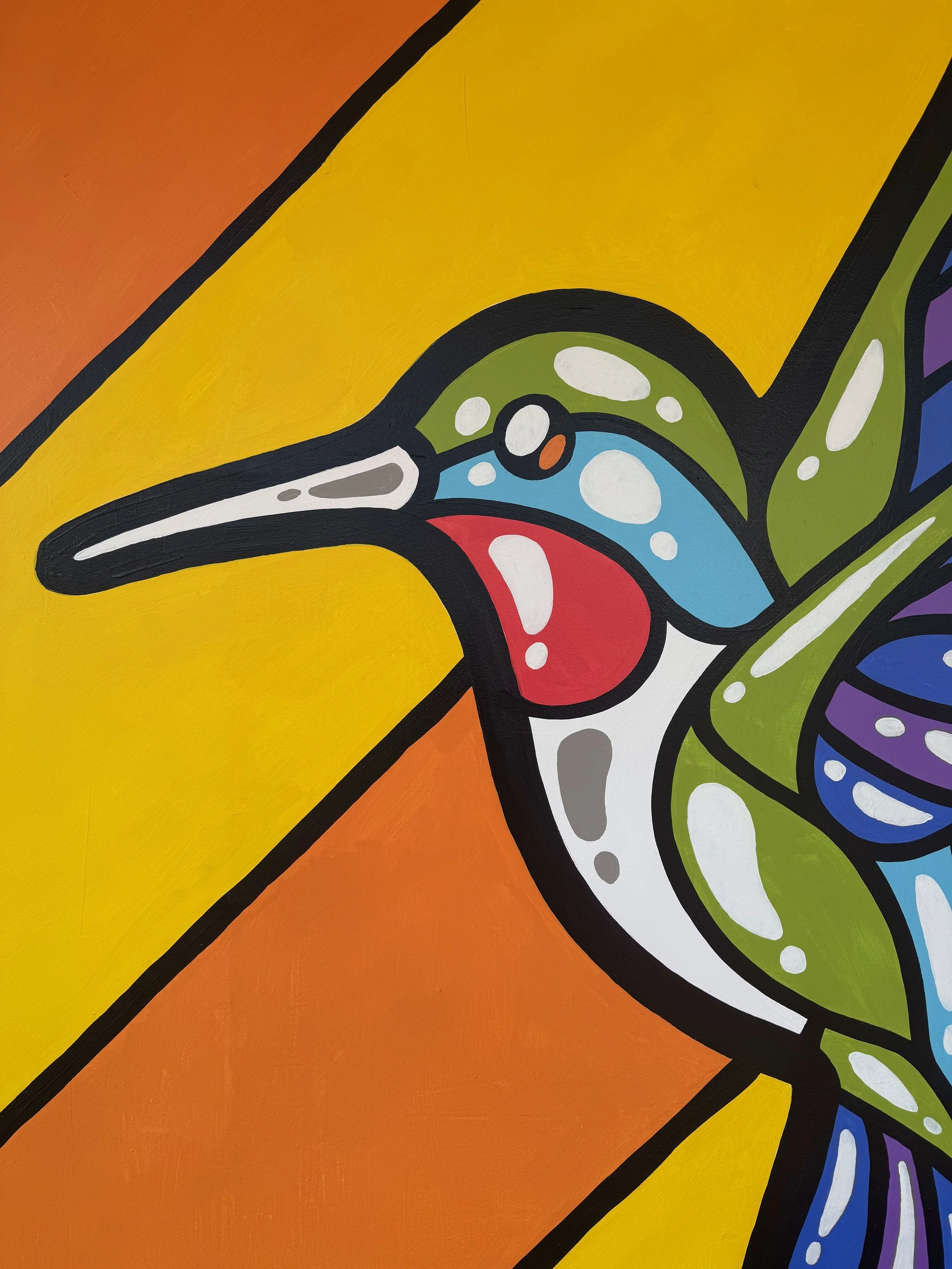
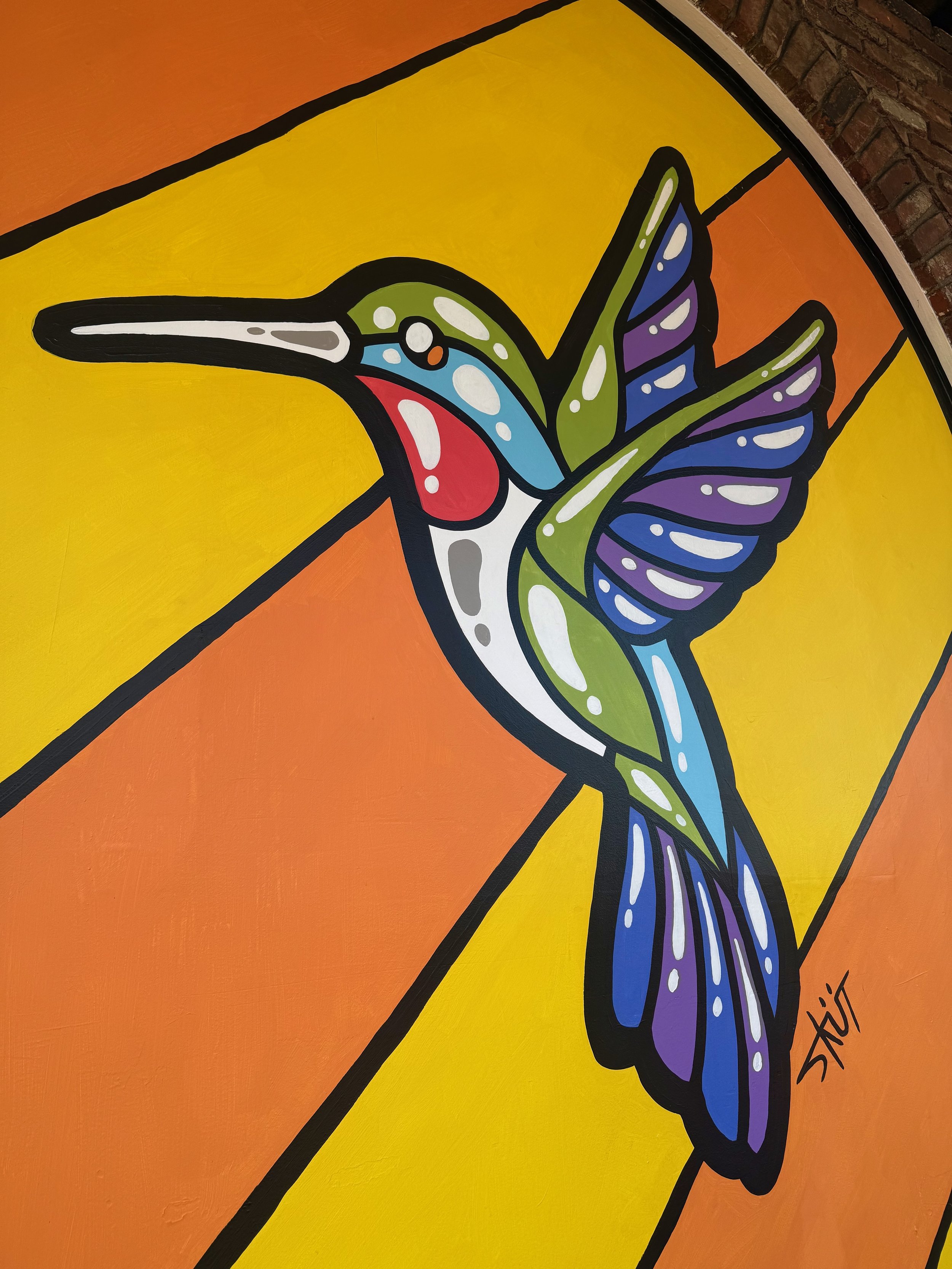
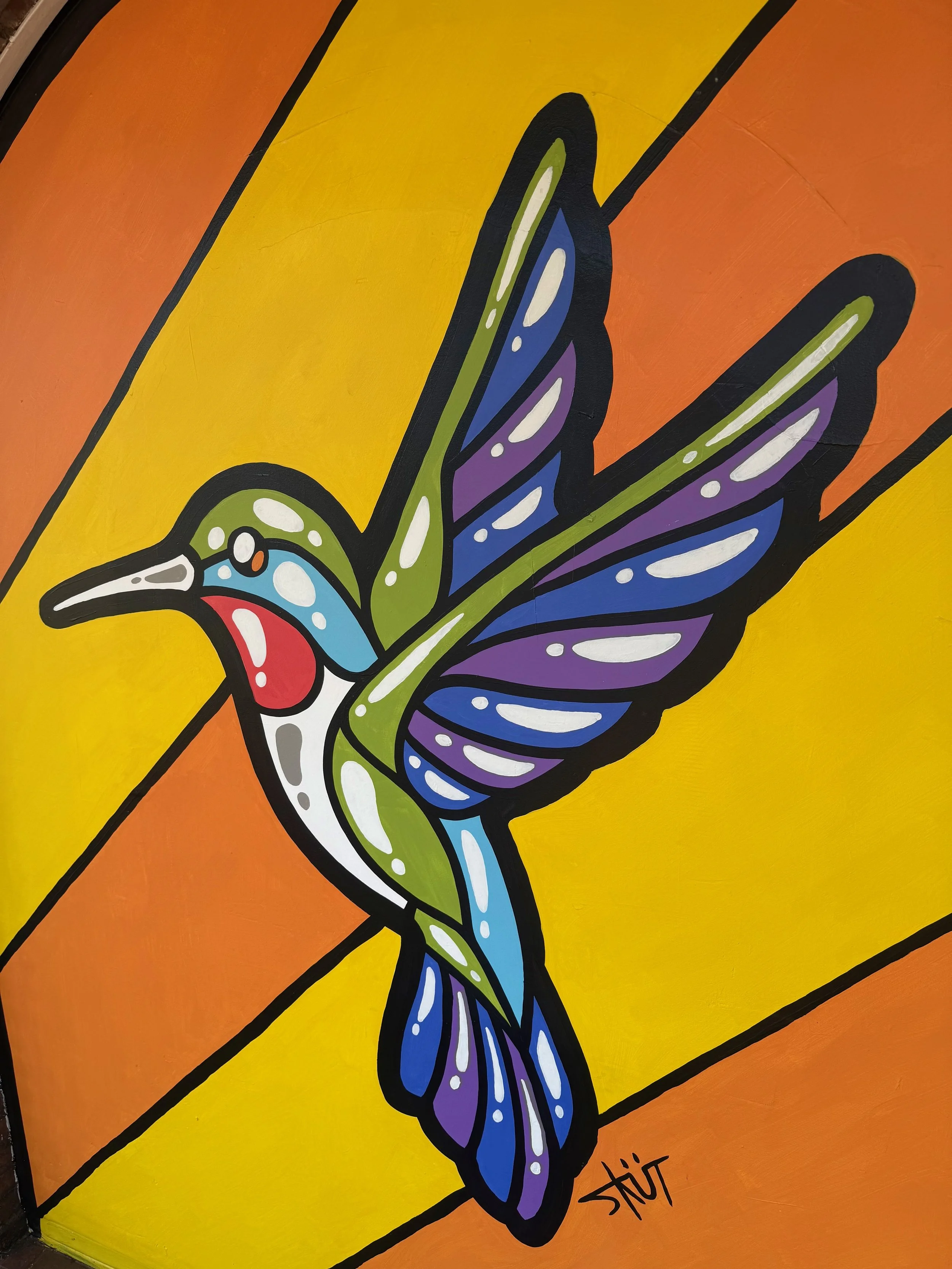
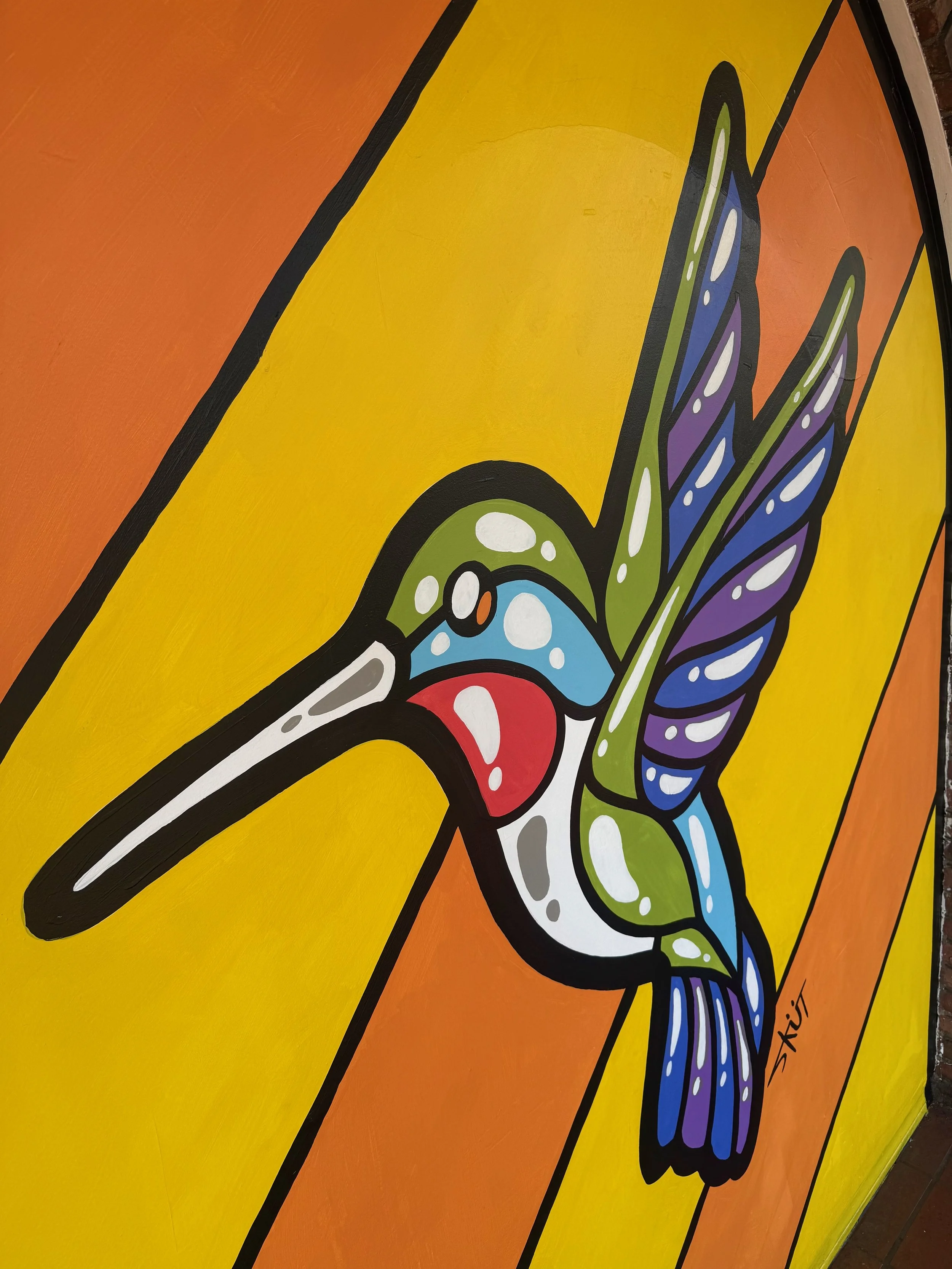
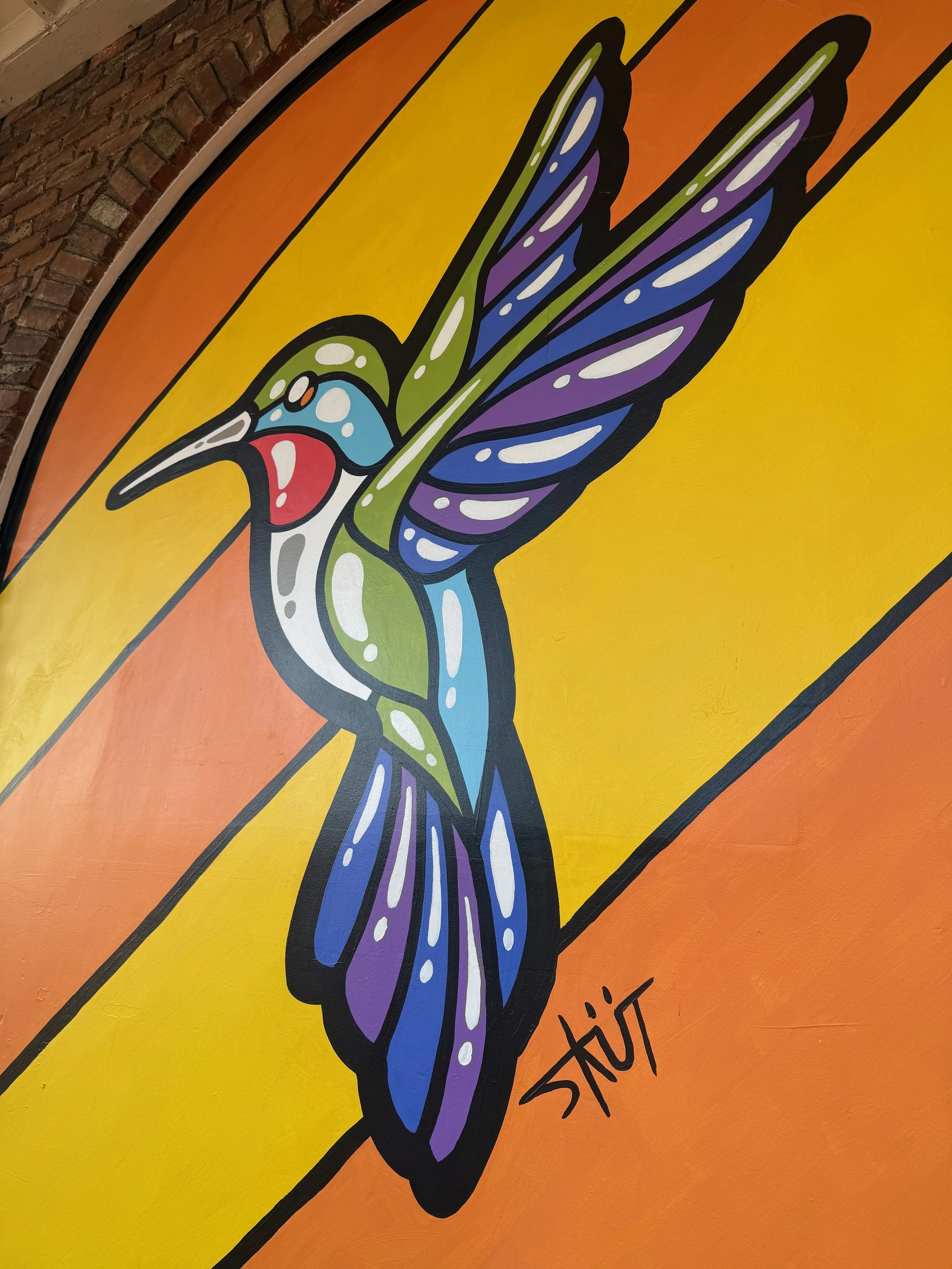
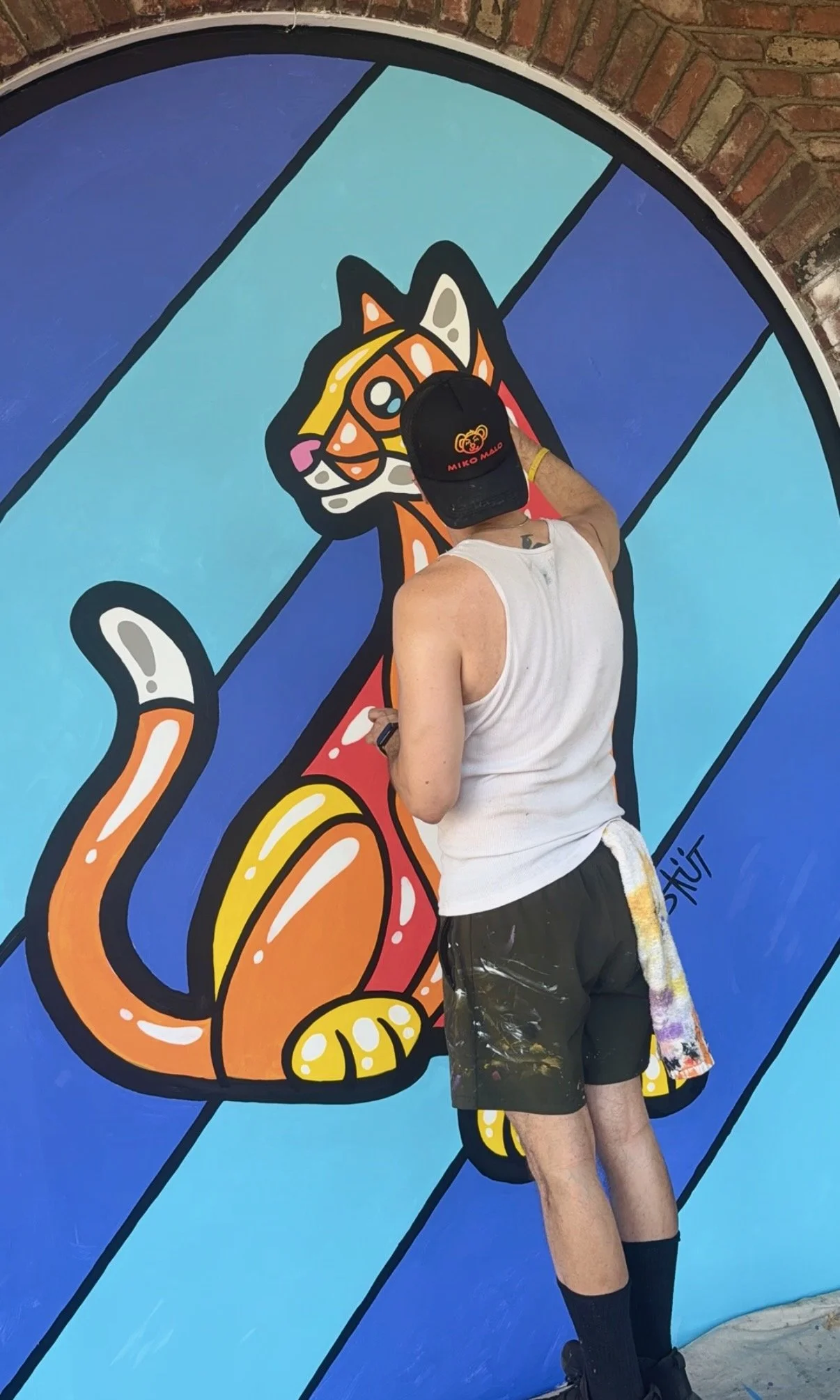
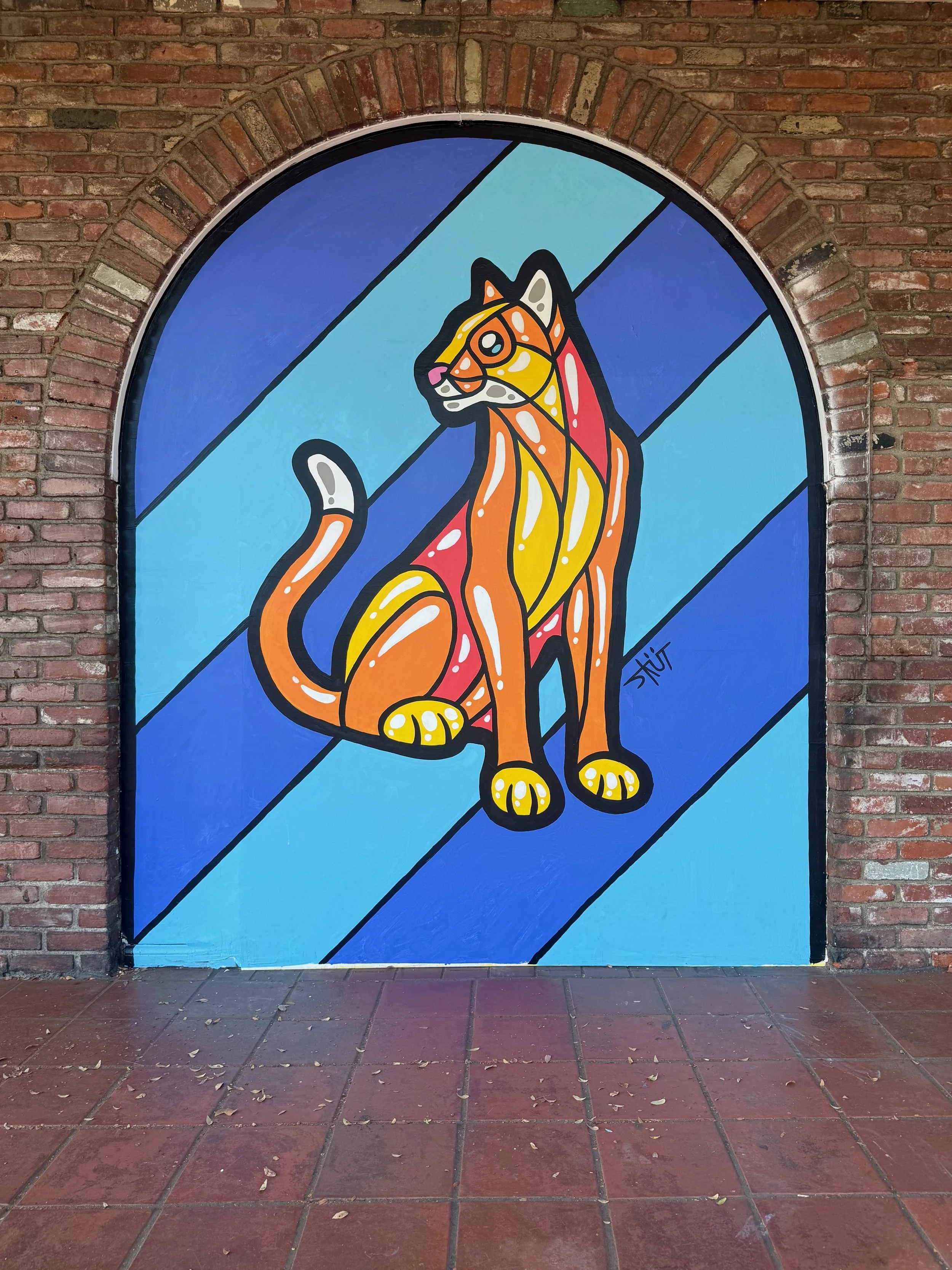
Five wildlife panels tell a story from the mountains to the Pacific Ocean. Viewers can follow the journey from right to left across the building. A mountain lion represents the mountains and wilderness hugging Los Angeles. A hummingbird celebrates the tiny visitors found on West Hollywood patios and balconies. A monarch butterfly anchors the installation from the center doorway. A California quail, like those spotted in Runyon Canyon and Griffith Park, represents California’s state bird. A bottlenose dolphin completes the journey in Santa Monica, where Route 66 meets the Pacific Ocean.
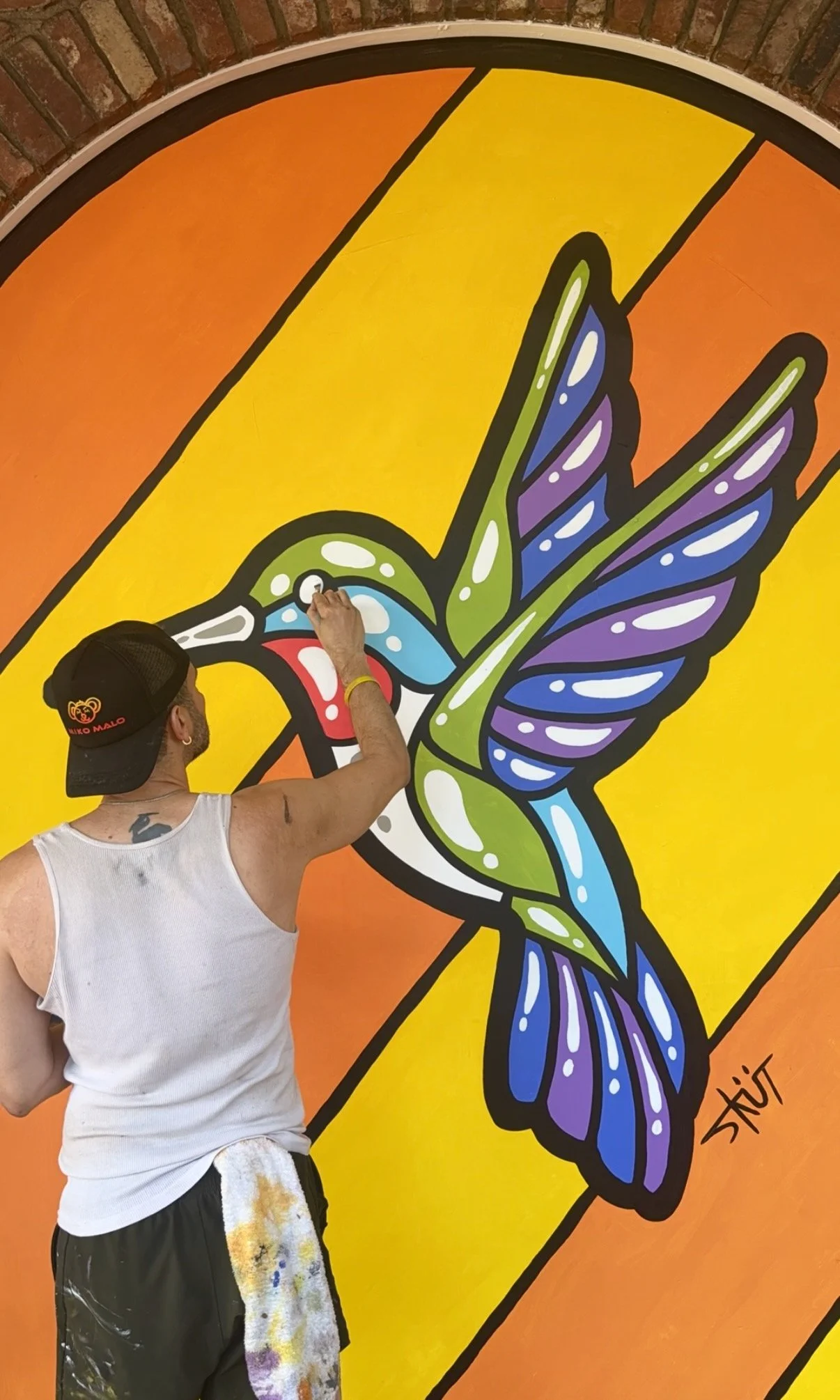
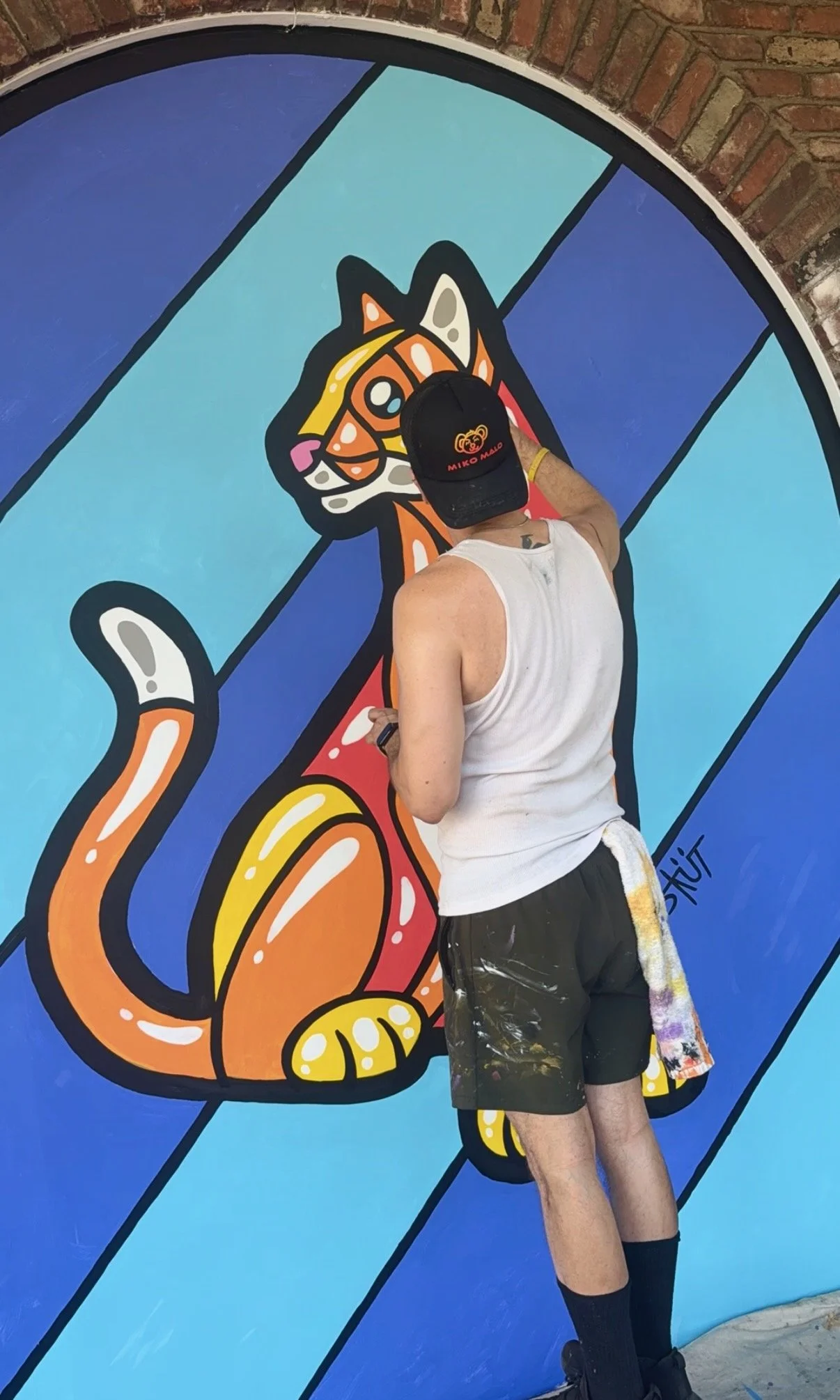
“We live in an incredibly biodiverse region, and we’re usually too busy staring at our phones to notice,” says Sküt. “These animals live among us. They were here first. Be a better roommate.”
Sküt’s favorite panel is the dolphin, while the hummingbird quickly became a crowd-pleaser. The California quail surprised visitors who did not recognize California’s official state bird.
“It’s like a chubby little chicken with sass and flair,” says Sküt. “If people leave knowing our state bird, then I’ve scored a point for the environment.”
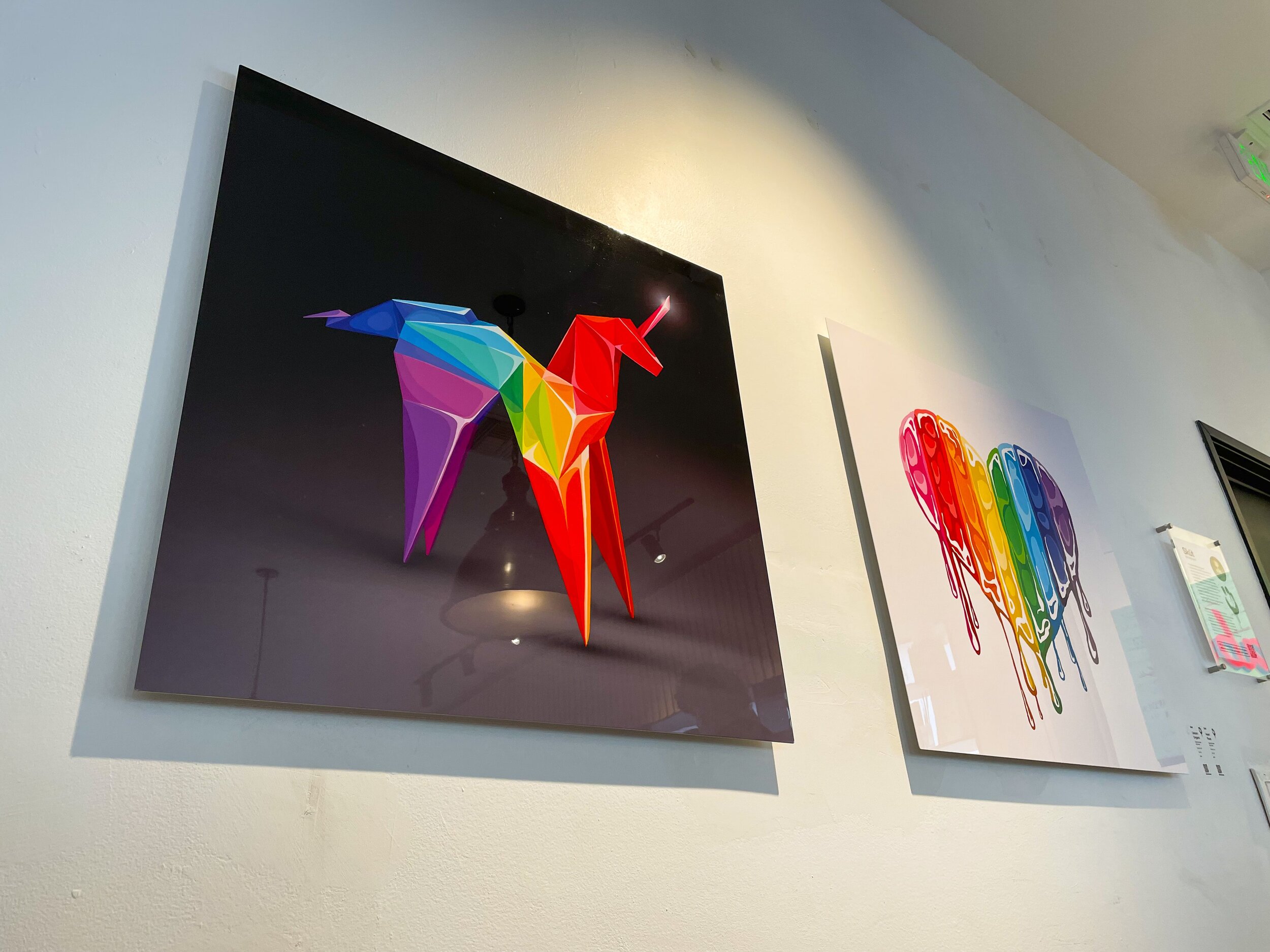
Sküt’s graphic pop-art style combines bold colors and crisp lines with stained-glass-inspired geometry. He began with iPad sketches, then added many of the final facets, highlights, and tonal shifts freehand. The quail changed dramatically, while added shades of gray and white gave the originally flatter monarch greater depth.
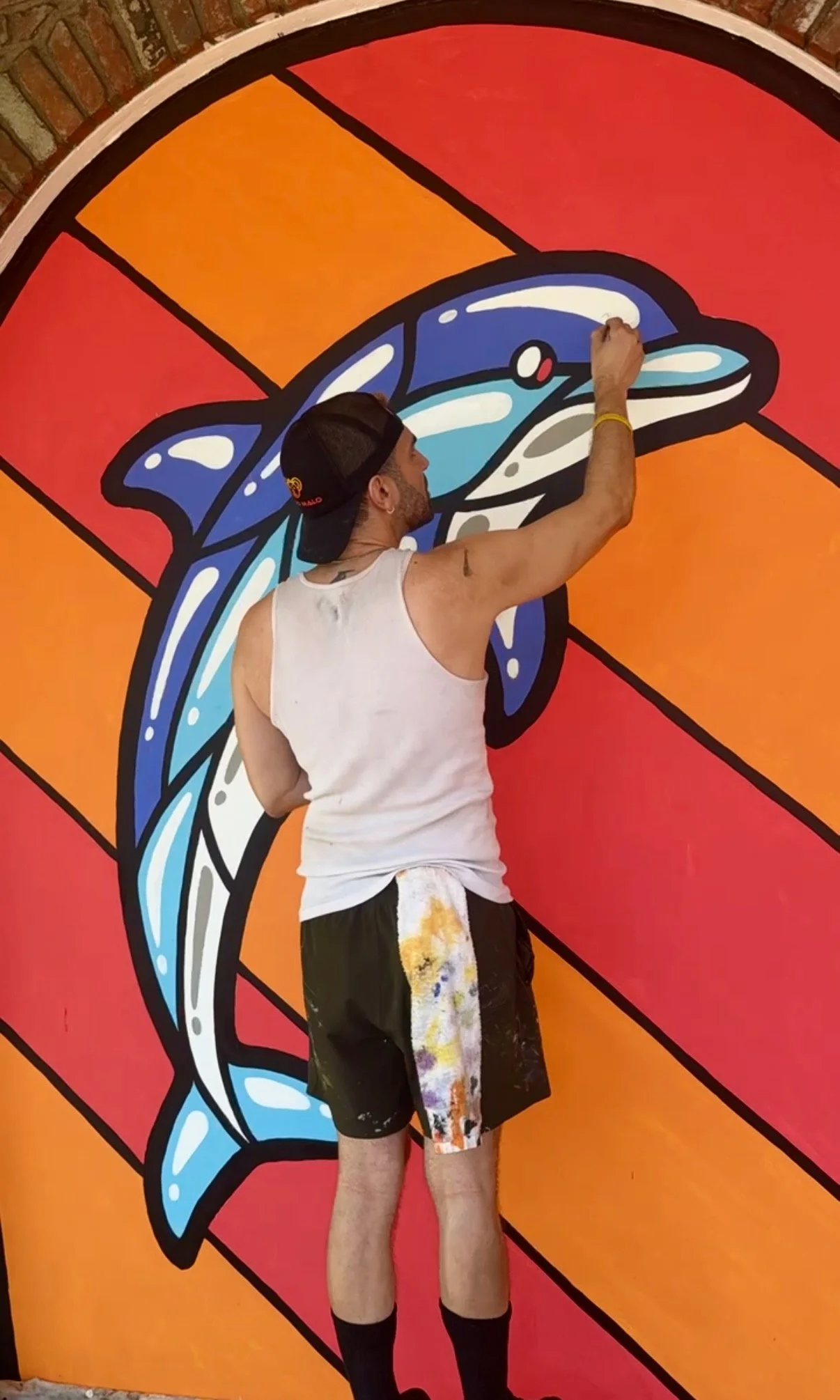

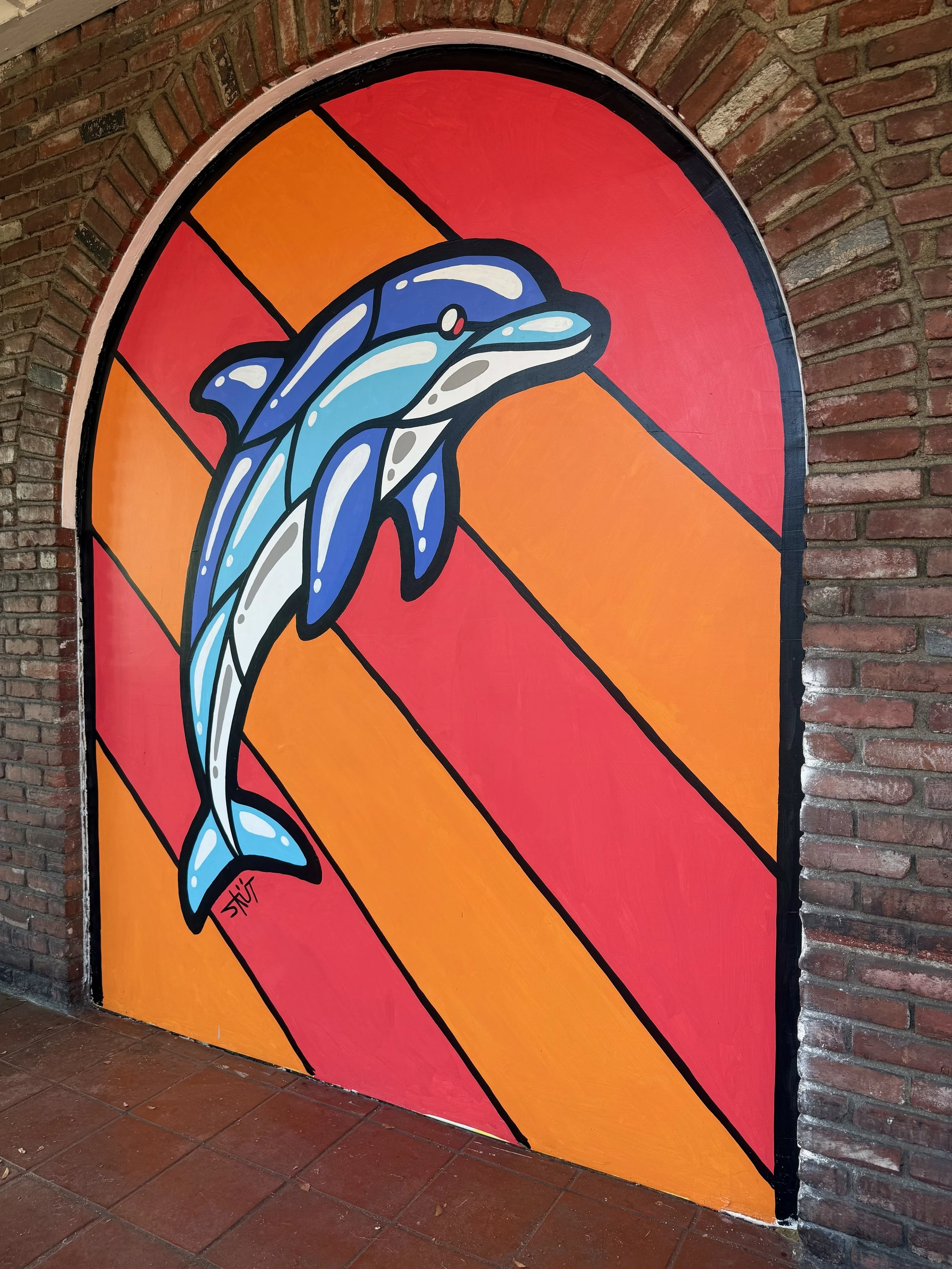


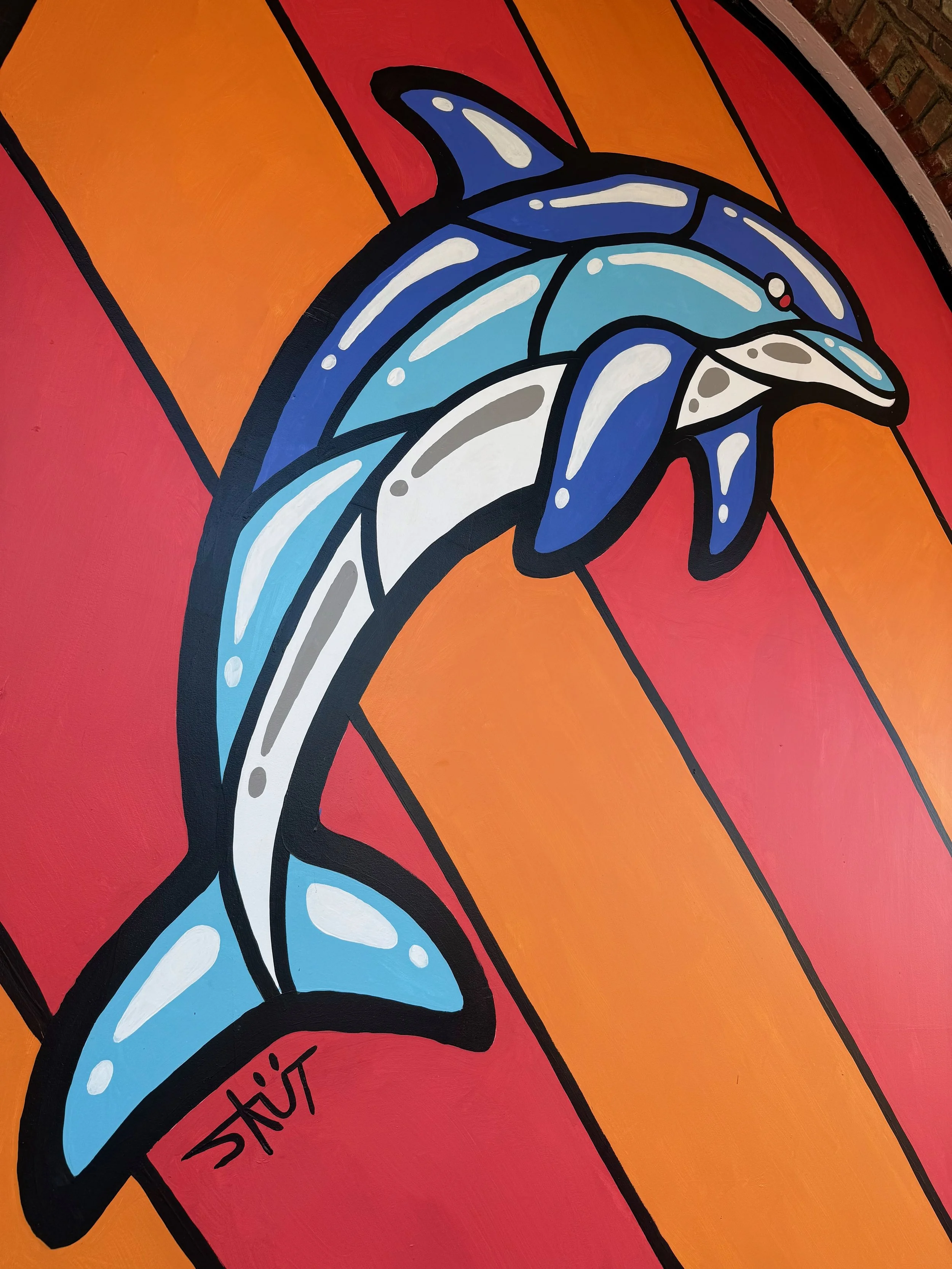

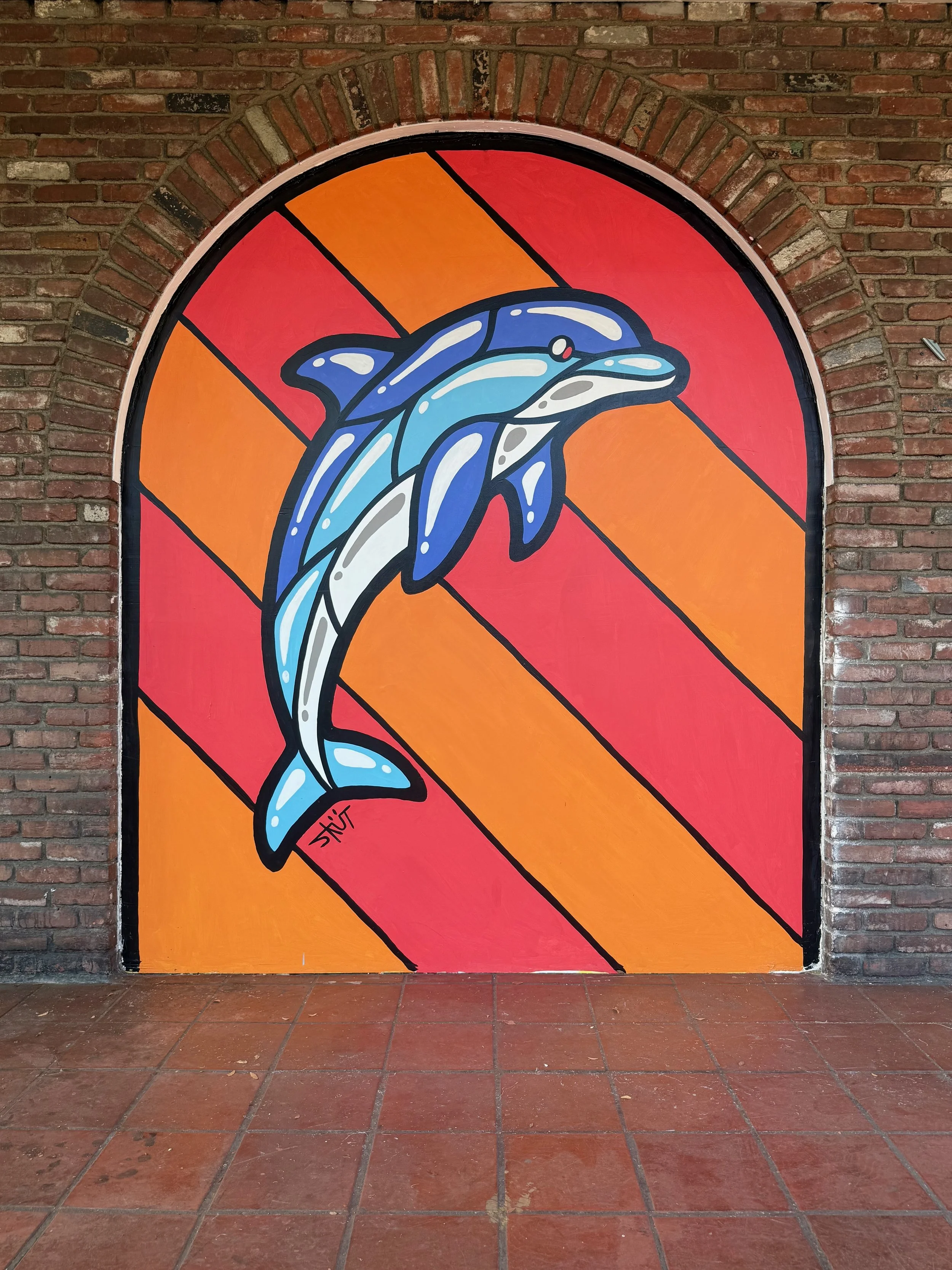

“The mockups are a map, not a prison,” says Sküt. “The core visuals stay intact, but once I start painting, the wall gets a vote and the art takes on a life of its own.”
The monarch also functions as a selfie station. Visitors can stand between its wings and become part of the artwork.
“You get to spread your wings and fly, or at least look fabulous trying,” says Sküt.
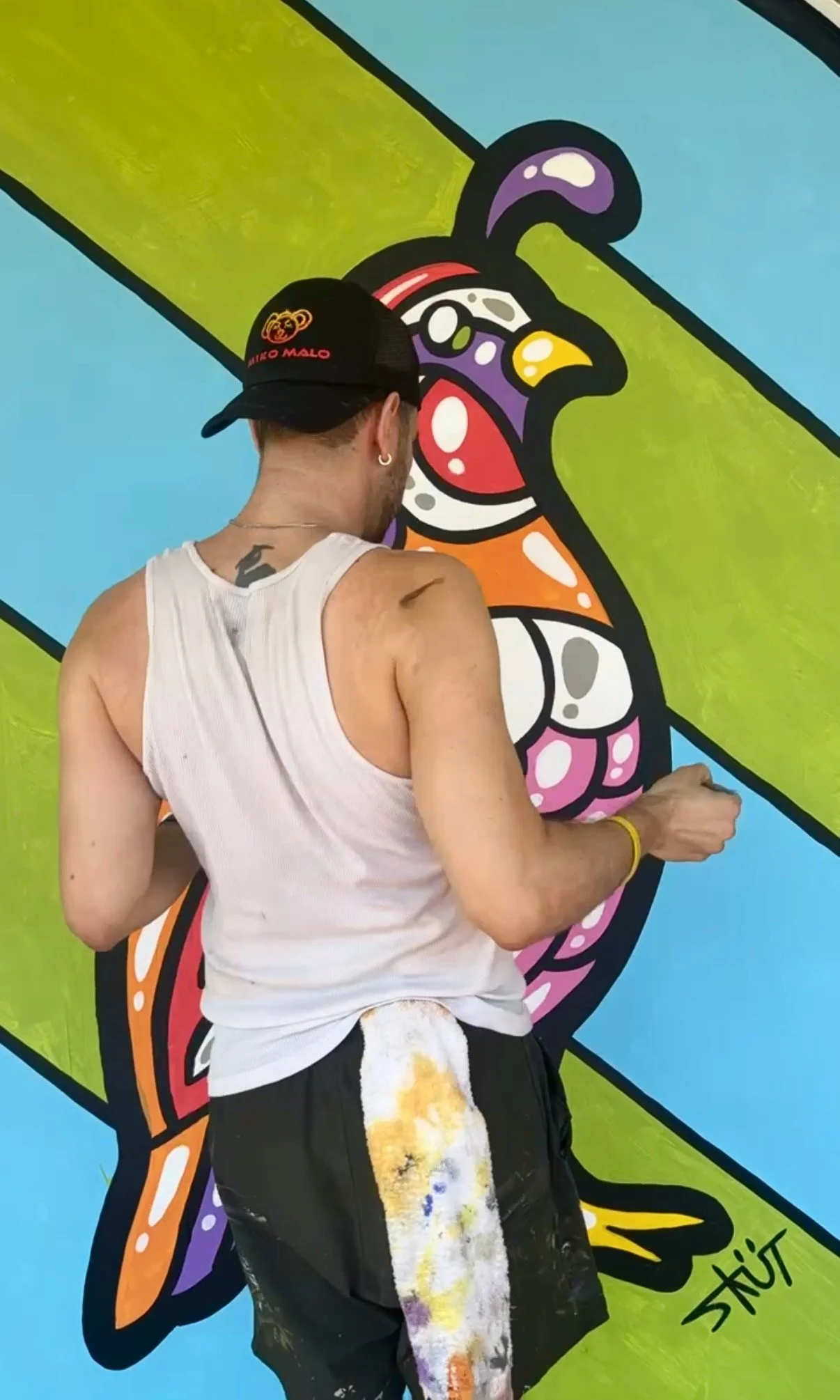


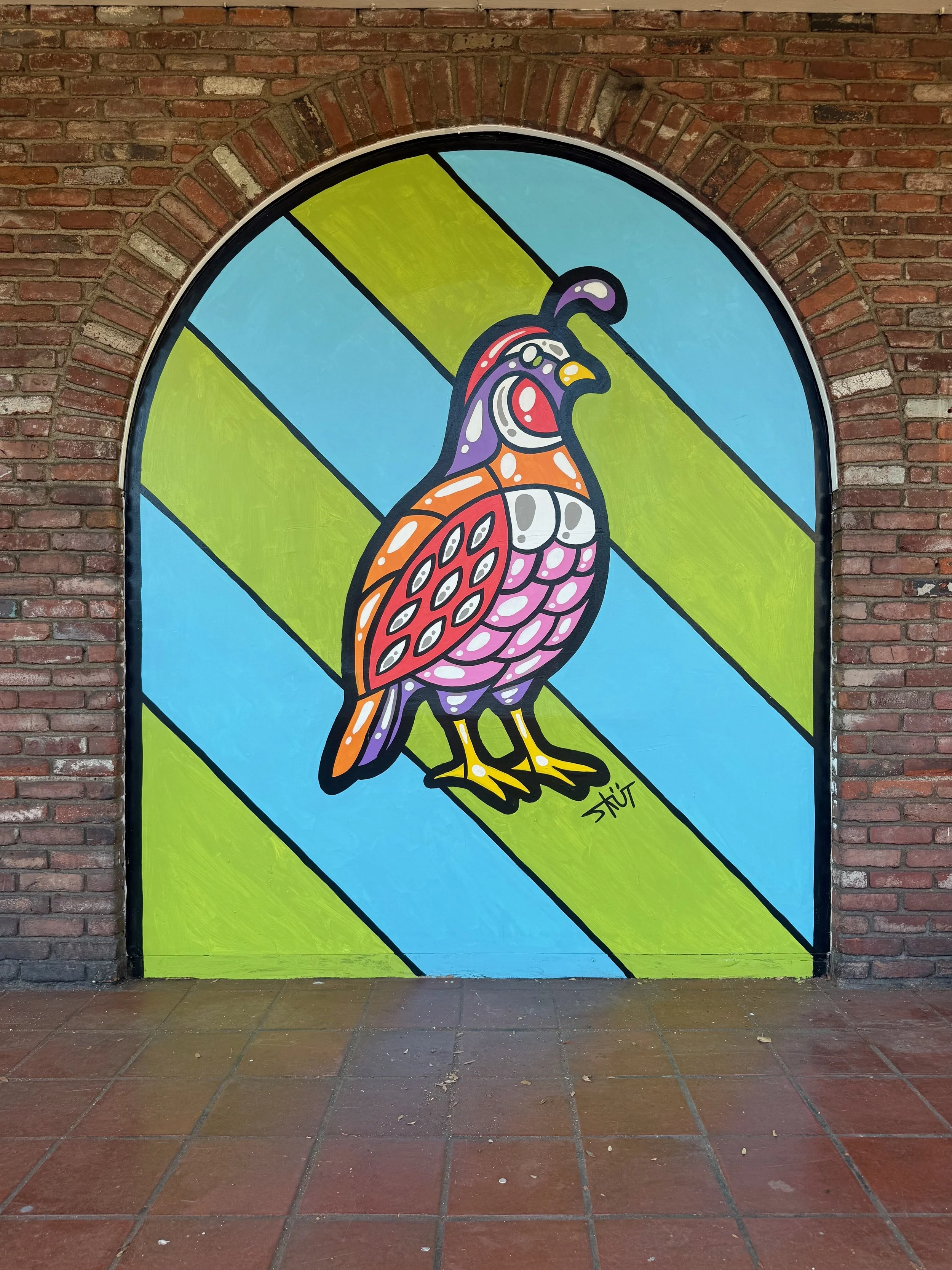

Sküt designed the butterfly shortly before Dolly Parton died. Although he did not conceive it as a memorial, the finished work now carries some of her spirit.
“Dolly led with love, empathy, and compassion,” he says. “We could all stand to be a bit more Dolly.”
Sküt scoped the project at seven days. Extreme heat, humidity, and a rare burst of September monsoon weather stretched the work to fourteen. The building’s overhang allowed him to keep painting during the heaviest downpour.
“I had the whole street to myself,” he laughs. “Well, almost. It was me and 500 mosquitoes.”




The extra week became a blessing. Without a rigid deadline, Sküt slowed down, followed the work, and added details that his original schedule would not have allowed. The unusual conditions also reinforced the installation’s themes of environmental and climate change awareness.
The vacant building offered no working water or electricity, so nearby Mic’s Bar became Sküt’s unofficial field office.
“They let me rinse my brushes, use the facilities, and enjoy a beer after painting,” says Sküt.

Historic Laurel Hardware sits across the street, and Delilah neighbors the installation. Pedestrians regularly stopped to ask questions, watch Sküt work, and take pictures.
“The art sits on private property, but people experience it from the street,” says Sküt. “Every selfie, conversation, and random moment of discovery adds something new.”



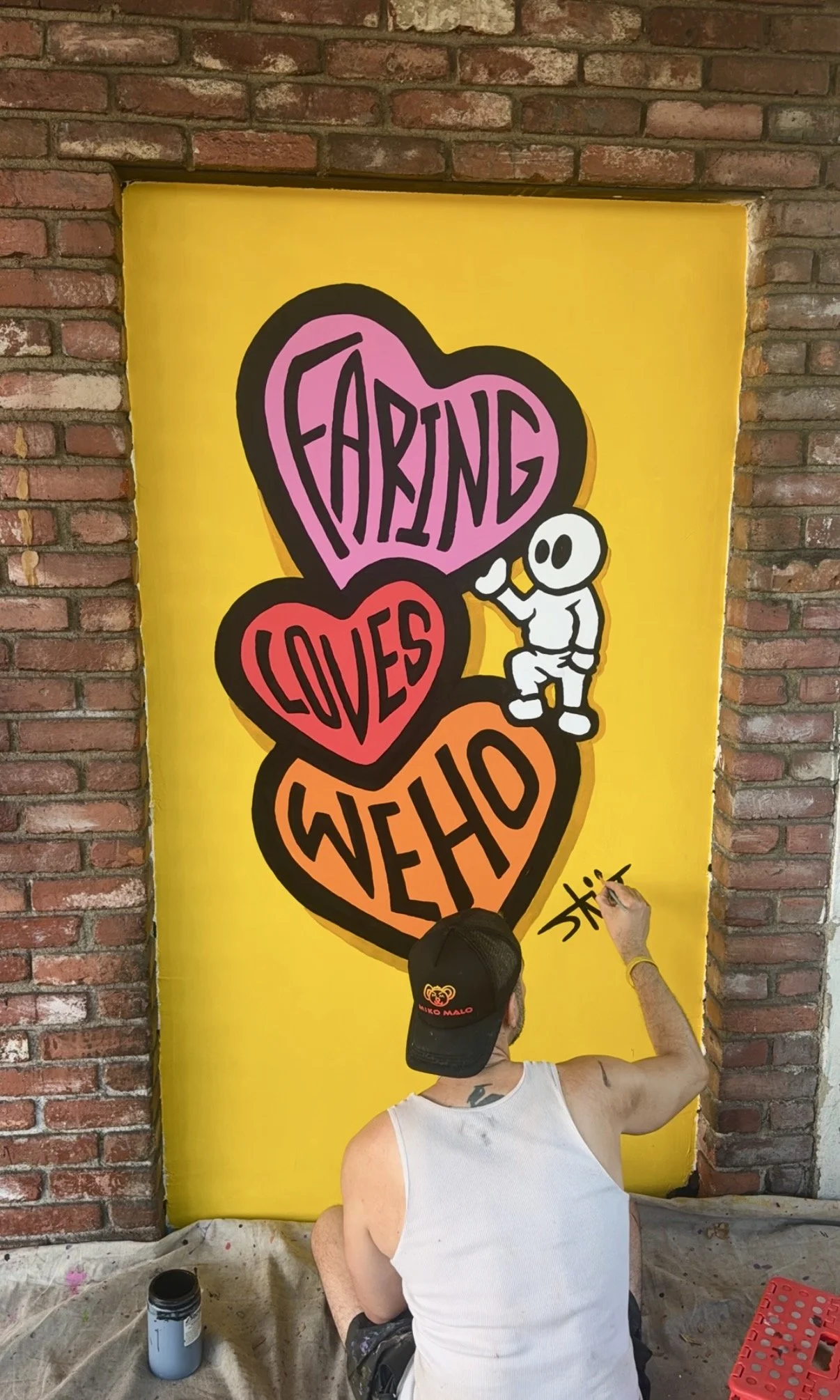
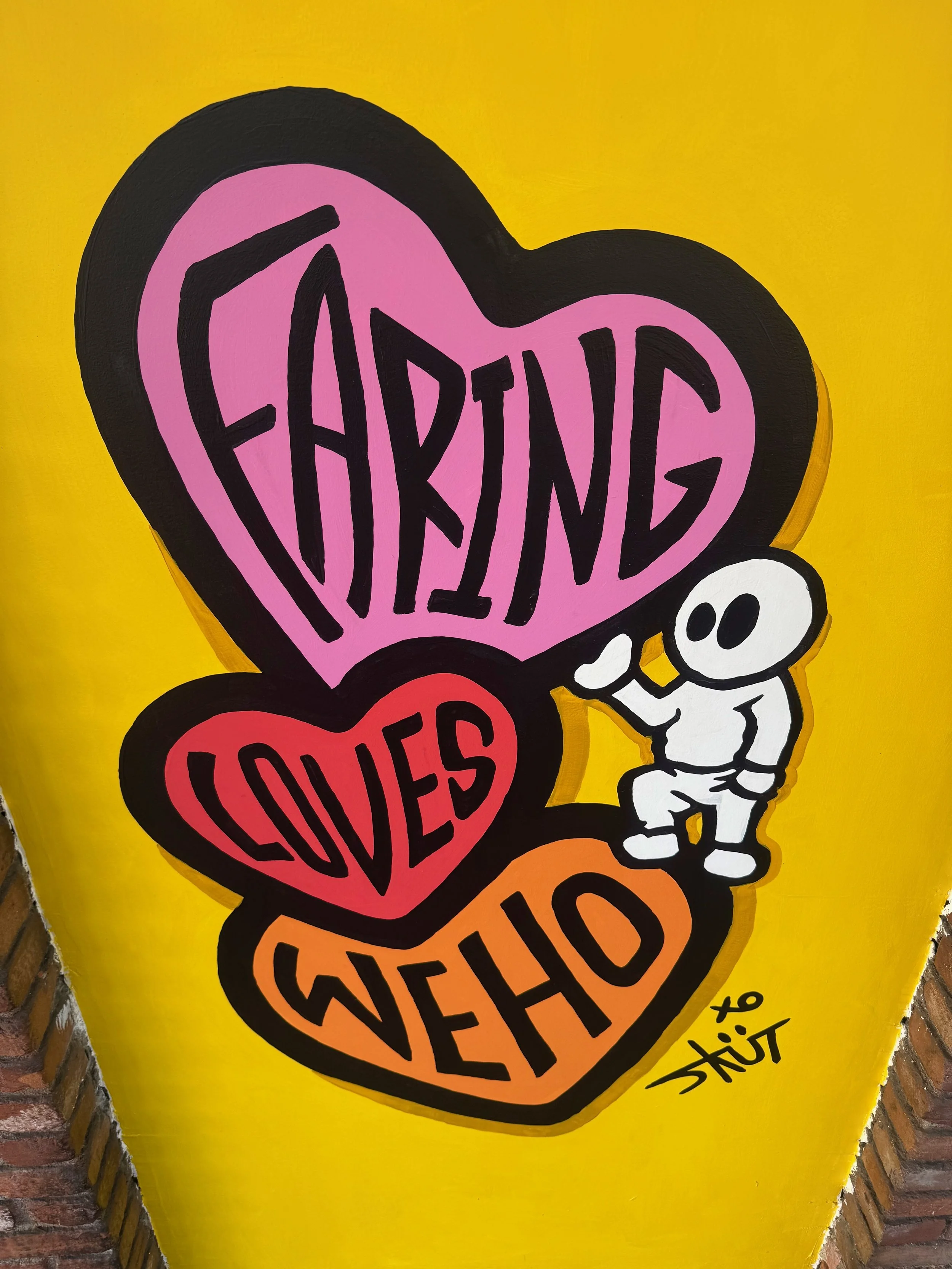
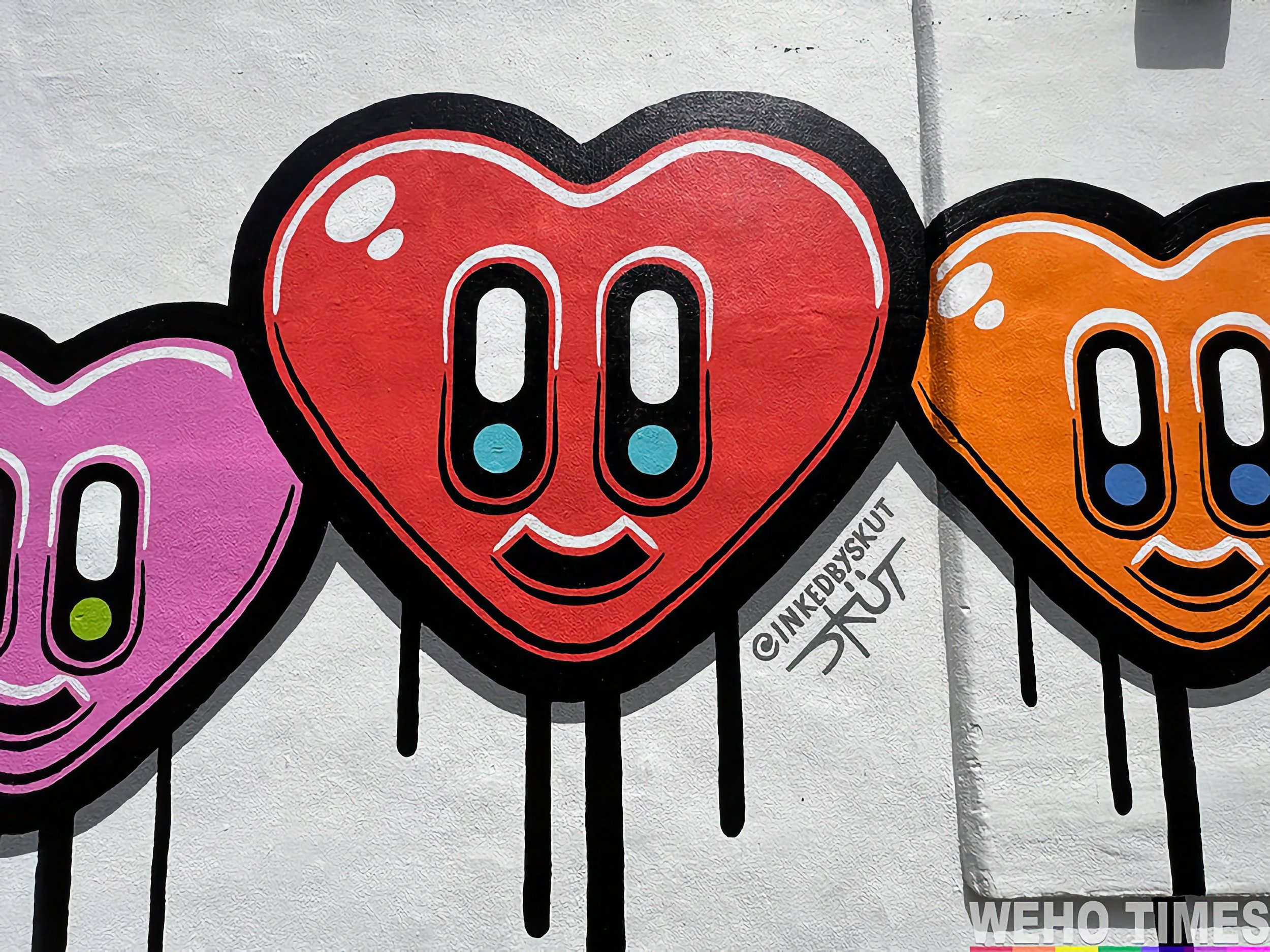
A smaller sixth panel carries the message “Faring Loves WeHo.” Sküt added three stacked hearts in pink, red, and orange against a yellow background. Nobo, his signature illustrated street art character, watches from the composition. The panel serves as a playful coda to the five-animal series.
Rewilding Weho encourages residents to embrace nature, even from a balcony, porch, or doorstep. Native milkweed and nectar-rich flowers support monarchs and other pollinators, while clean hummingbird feeders provide another food source for birds moving through the city.
Sküt leaves visitors with a simple challenge: “Rewilding starts with one seed and a small act of care. Do it for the Earth.”




About The Artist
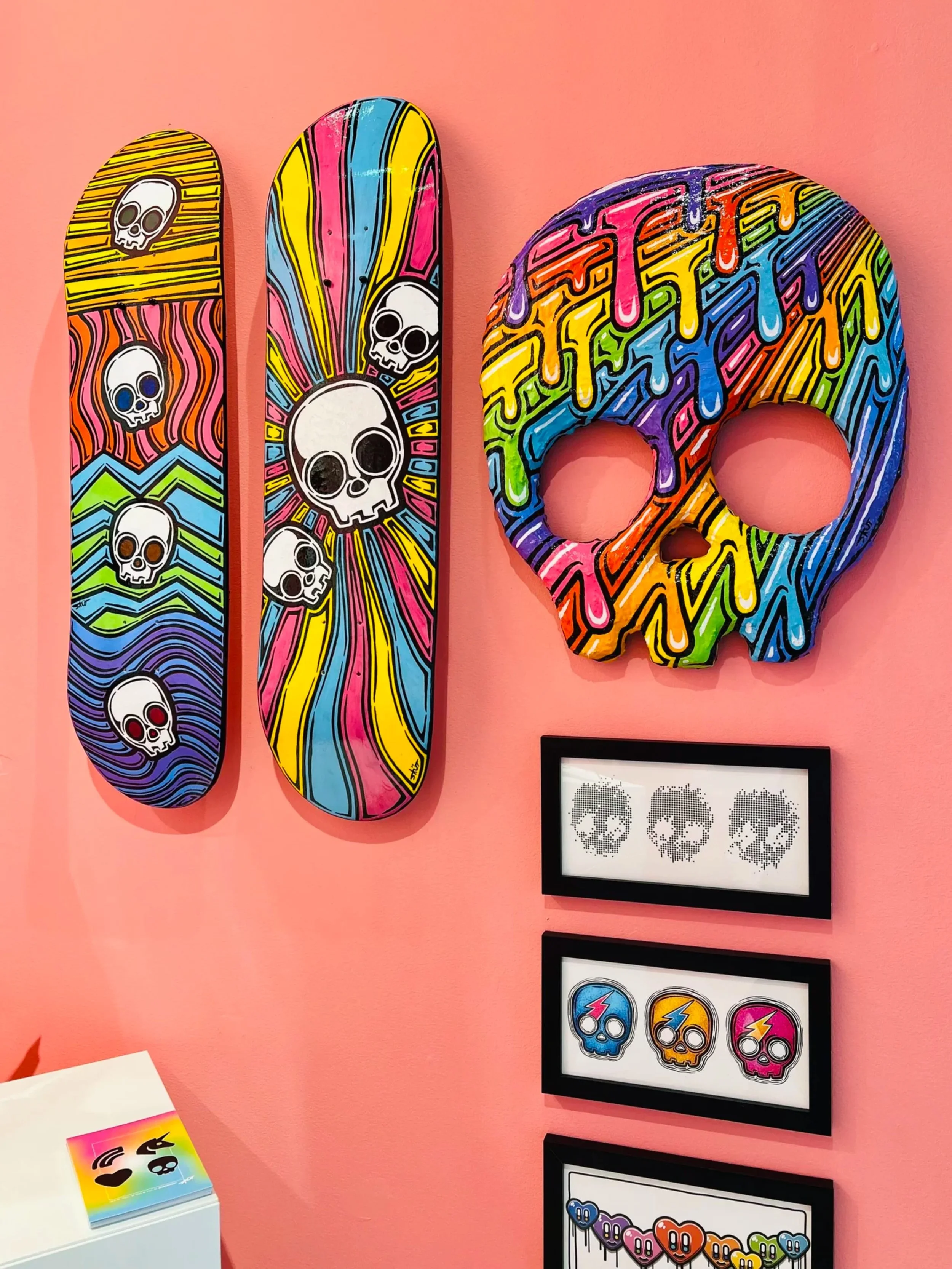
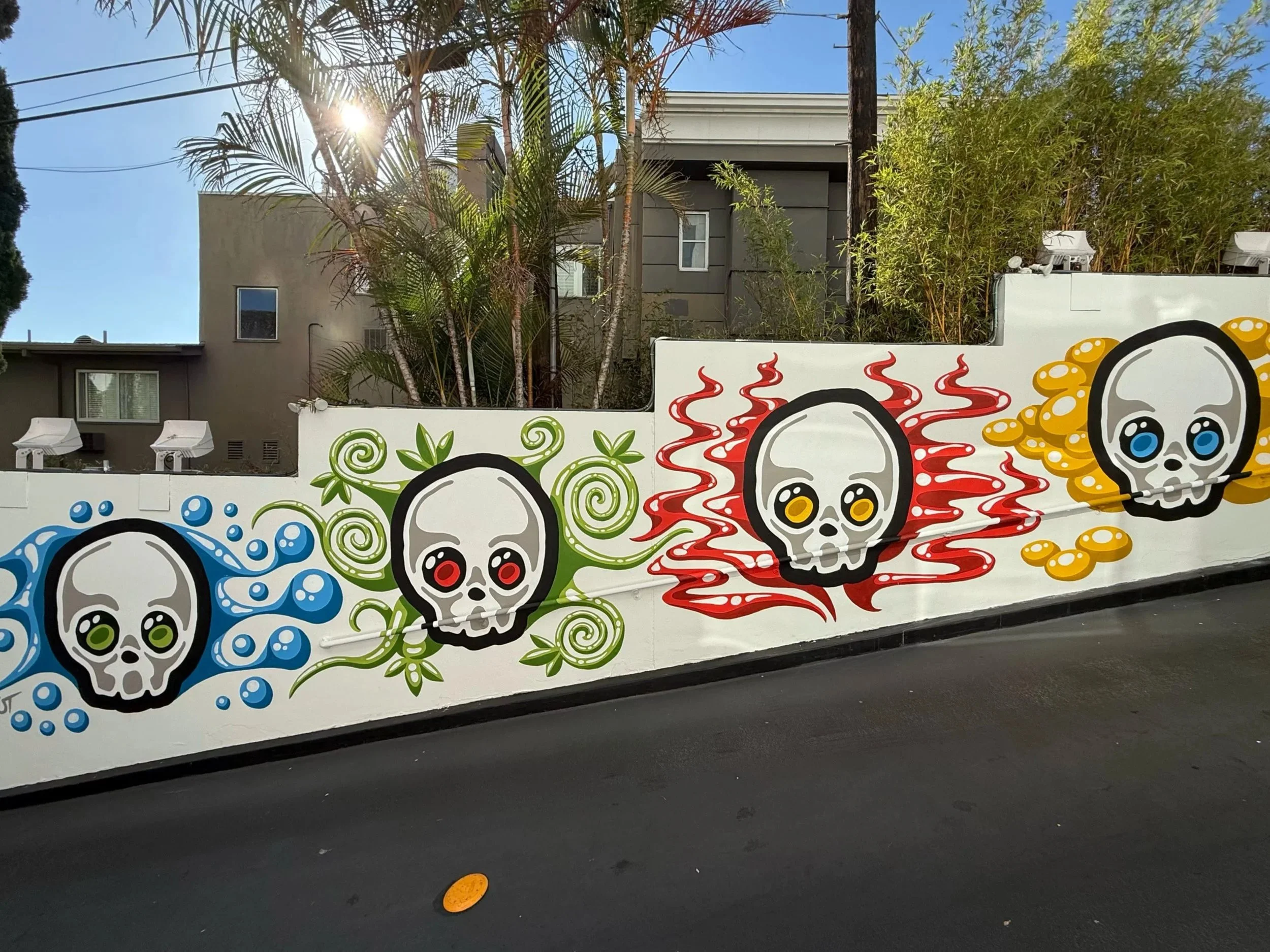
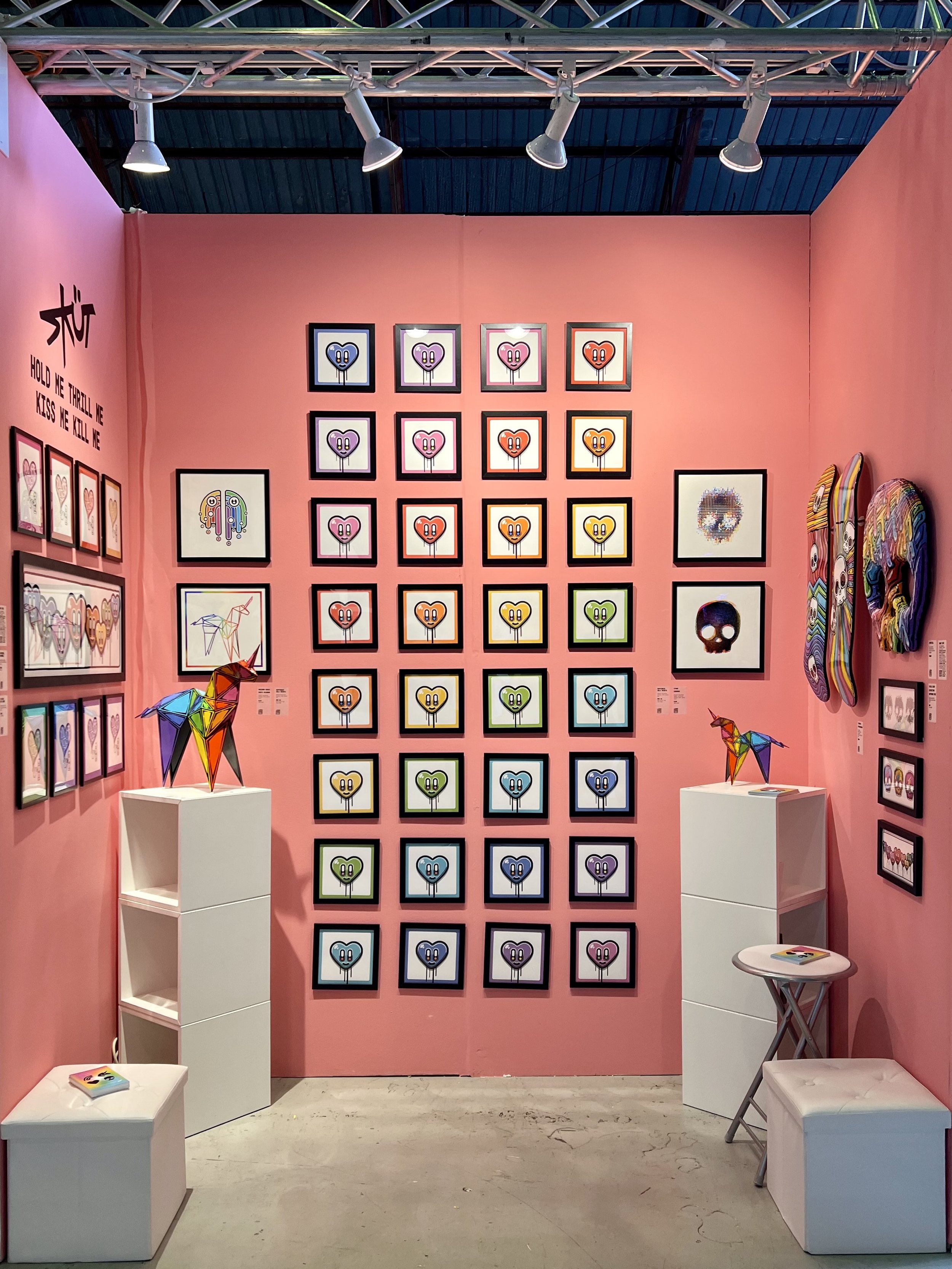
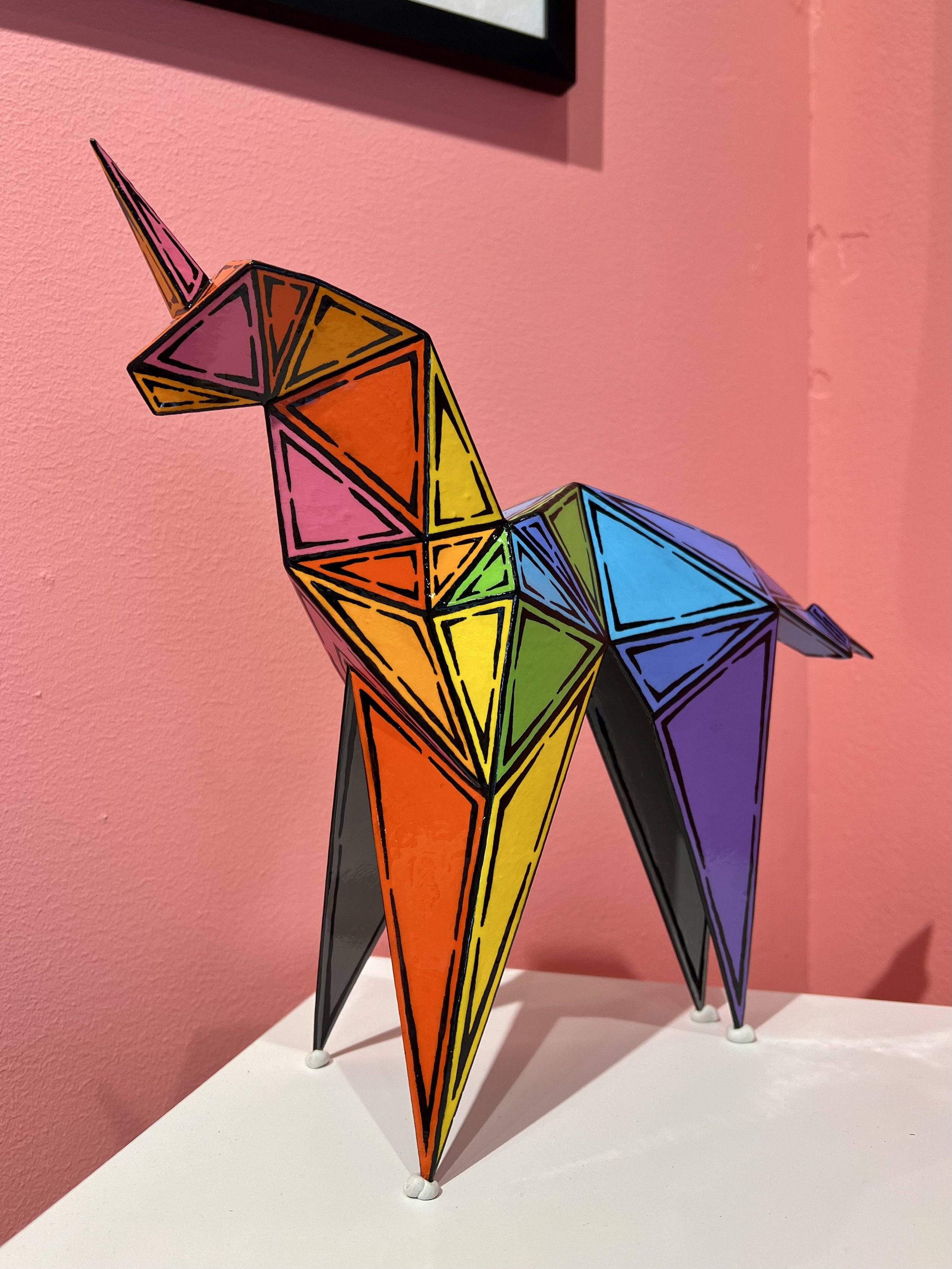
Sküt (Scott Lewallen) is a West Hollywood based artist, designer, entrepreneur, and co-founder of Grindr whose graphic pop art style combines culture, emotion, technology, color, and a healthy disregard for staying in one lane.
Working across public art, murals, sculpture, immersive installations, light, sound, and unconventional spaces, Sküt creates work intended to be bold, accessible, and alive. No velvet ropes. No secret handshakes. Only Love.
See more art on his instagram @inkedbyskut














































![Fine artist Sküt, stands in front of his creation, a 30 foot tall go-go-boy flanked by neon rainbows. [Photo Credit: Kevin Winston, Digital LA]](https://images.squarespace-cdn.com/content/v1/5ec8a2299d9c412a9d7d5c86/1624749812864-R8YWJI150YV7SFC4D0WJ/Sk%C3%BCt+Micky%27s+Comeback+Mural+Press+Release+Photo.jpg)